
By Opeyemi Adelakun
The image of a former Nigerian Head of State appearing in a promotional video for a hospital in India has prompted a wider question about the state of healthcare in Africa’s most populous country: why do Nigerians, including prominent public figures, continue to seek specialised medical treatment abroad?
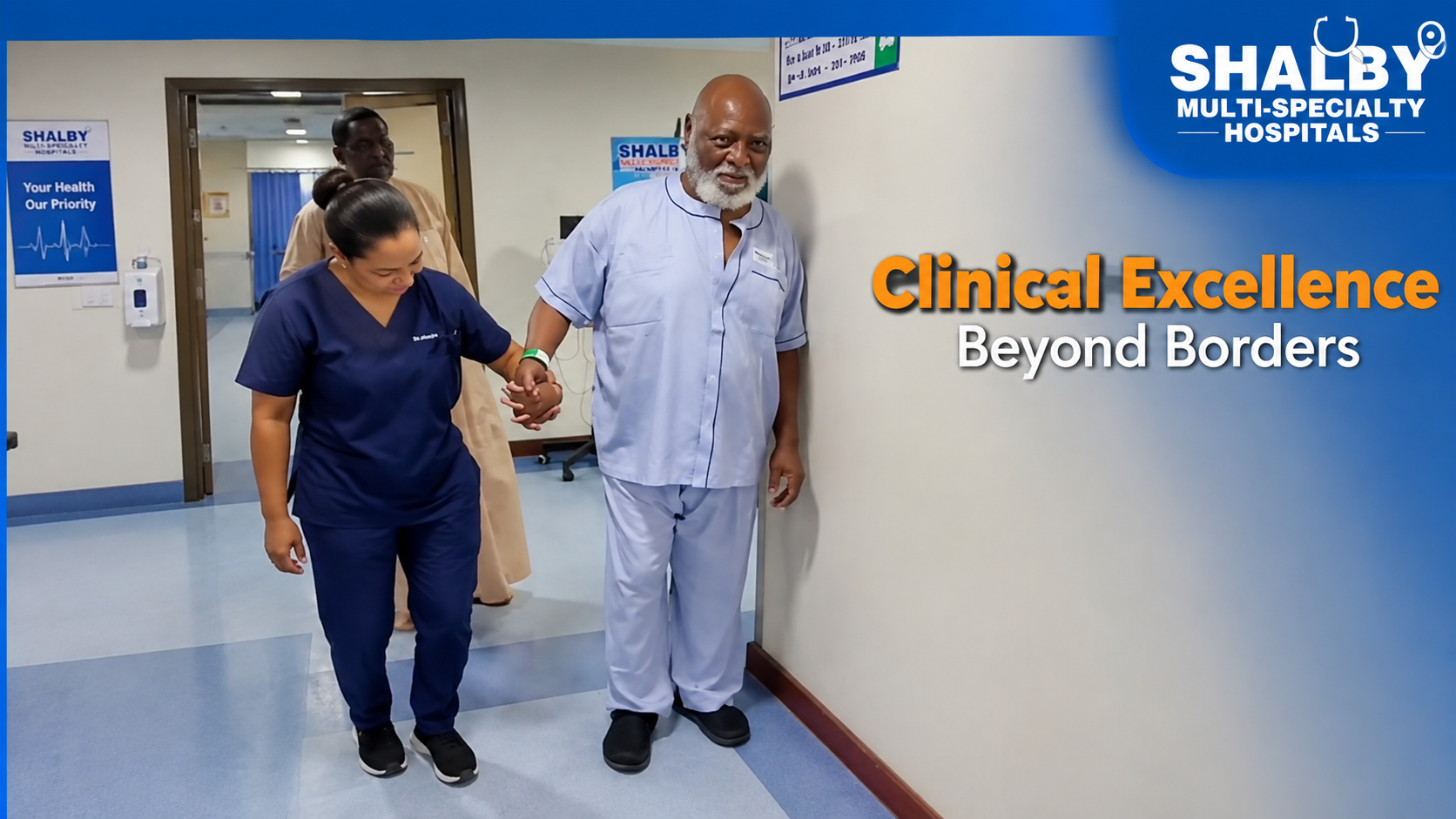
General Abdulsalami Abubakar, who led Nigeria between 1998 and 1999, reportedly underwent a successful total knee replacement at Shalby Hospital in India. The development has drawn attention to the choices available to Nigerians requiring advanced medical procedures and the limitations they may perceive in the domestic healthcare system.
The issue is not whether an individual should travel abroad for medical treatment. Patients have the right to seek care wherever they believe their needs can best be met. Nor does treatment overseas, by itself, establish that Nigeria lacks the expertise required to perform a particular procedure.
Rather, the concern is why the country continues to struggle to build a healthcare system in which high-quality specialist treatment is accessible, affordable and dependable at home.
For a country that has produced generations of medical professionals and spent decades earning revenue from oil and gas, the continued movement of patients abroad raises difficult questions about infrastructure, investment, equipment, healthcare financing and the priorities of successive administrations.
The challenge becomes more striking when the patients travelling overseas include people who have occupied the highest public offices in the country.
The problem goes beyond one operation
Total knee replacement is an established orthopaedic procedure used to relieve severe pain and improve mobility in patients whose knee joints have been significantly damaged, often by arthritis or other degenerative conditions.
The procedure requires more than a surgeon capable of performing the operation. It depends on a coordinated system involving pre-operative assessment, diagnostic imaging, anaesthesia, sterile operating facilities, implants, rehabilitation, nursing care and long-term follow-up.
A hospital may have skilled doctors but lack some of the equipment, specialist teams or supporting services needed to provide a particular treatment consistently.
This distinction is central to Nigeria’s healthcare challenge. Medical expertise exists in the country, but the availability of that expertise does not automatically translate into universal access to quality care.
Patients also consider waiting times, costs, the availability of specialised equipment, confidence in clinical outcomes and the capacity to manage complications. Some travel abroad because of established relationships with foreign hospitals or recommendations from previous patients.
Consequently, reducing medical tourism requires more than asking Nigerians to patronise local facilities. It requires investment in institutions that patients can trust.
For older citizens, the stakes can be particularly high. Long-distance travel for surgery and recovery may create additional financial, physical and logistical burdens for patients and their families.
The policy question is whether Nigeria can build a system that gives people more credible options at home.
Private hospitals show what domestic investment can achieve
Despite the challenges, developments in Nigeria’s private healthcare sector suggest that the country has the capacity to establish modern specialist facilities.
Hospitals in Lagos and Abuja have invested in advanced diagnostics, specialist services, modern operating theatres and treatment programmes designed to serve patients who might otherwise consider travelling overseas.
Among the facilities highlighted in discussions about Nigeria’s healthcare development are Duchess International Hospital in Ikeja, Evercare Hospital in Lekki, Marcelle Ruth Cancer Centre in Victoria Island and the Africa Medical Centre of Excellence in Abuja.
These institutions represent different approaches to private healthcare investment, specialist treatment and international collaboration.
Duchess International Hospital has expanded the availability of specialist medical services in Lagos, while Evercare Hospital has added capacity for complex treatment and inpatient care.
Marcelle Ruth Cancer Centre focuses on cancer diagnosis and treatment, a field in which access to appropriate technology and coordinated specialist care can significantly affect patients’ options.
The Africa Medical Centre of Excellence, developed with Afreximbank’s involvement and international clinical partnerships, reflects efforts to establish a specialist centre for conditions including cancer and cardiovascular diseases.
Their development challenges the assumption that advanced medical facilities cannot be established in Nigeria.
However, the existence of these hospitals does not mean that every major treatment is now available nationwide or that all Nigerians can afford their services.
A modern private hospital may offer sophisticated care while remaining financially inaccessible to many households. Specialist facilities concentrated in Lagos and Abuja also do little, on their own, to address disparities in access across the six geopolitical zones.
The lesson is therefore twofold: investment can improve local treatment options, but the country still needs a broader strategy to make quality healthcare available to more people.
What would it take to build more specialist hospitals?
The debate over Nigeria’s healthcare future often returns to the cost of building and equipping a world-class hospital.
Establishing a modern tertiary facility requires substantial capital. The final cost depends on its size, location, clinical specialities, construction standards, imported equipment, staffing model and operational requirements.
A hospital designed primarily for orthopaedics, for instance, would have different requirements from one offering advanced cancer treatment, cardiac surgery, organ transplantation and intensive care.
Construction is only the beginning.
Hospitals must also recruit and retain skilled doctors, nurses, biomedical engineers, pharmacists, laboratory scientists and other healthcare professionals. They need dependable electricity, water, medical oxygen, laboratory supplies, maintenance systems and reliable access to medicines.
Equipment must be serviced and upgraded. Staff require continuing training. Hospitals must also generate enough revenue or receive adequate public funding to maintain standards without making essential treatment unaffordable.
These recurring obligations are often overlooked when the discussion focuses exclusively on the cost of constructing a facility.
Nigeria needs not merely impressive hospital buildings but institutions that can deliver safe, effective treatment consistently for decades.
A national programme could therefore combine public investment, private capital, development finance, teaching-hospital partnerships and carefully regulated public-private arrangements.
Such a programme would also need transparent procurement, independent clinical oversight, clear performance targets and public reporting on outcomes.
Medical tourism and the cost of looking abroad
Medical tourism has implications beyond the individual patient’s hospital bill.
When Nigerians pay foreign hospitals for treatment, part of that expenditure leaves the domestic economy. Patients may also spend on flights, accommodation, consultations and the support services required during recovery.
For families, the total cost can be significantly higher than the quoted price of an operation.
At the national level, sustained overseas spending on healthcare can contribute to foreign-exchange outflows. It also represents business that domestic hospitals could potentially attract if they offered suitable treatment at competitive prices and met patients’ expectations.
However, claims about the precise annual cost of medical tourism vary according to the period, exchange rates and services included in the estimates. Any figure used to quantify Nigeria’s losses should be supported by a clearly identified and credible source.
It would be equally misleading to assume that all spending abroad could immediately be redirected to Nigerian hospitals. Some patients require highly specialised procedures unavailable locally, while others travel because of personal preferences, clinical recommendations or access to particular specialists.
The realistic objective is to reduce avoidable medical travel by improving domestic capacity, not to prevent patients from exercising their right to seek treatment elsewhere.
The public healthcare system cannot be left behind
Private hospitals are an important part of the solution, but they cannot carry the responsibility alone.
Nigeria’s public teaching hospitals and specialist institutions remain central to medical education, research, specialist training and the delivery of complex care.
Their capacity depends on sustained funding, modern equipment, reliable infrastructure and working conditions that enable medical professionals to perform effectively.
When equipment breaks down and remains unrepaired, specialist services become less dependable. When hospitals lack essential supplies or struggle to maintain infrastructure, patients may face delays, additional expenses or referrals elsewhere.
These problems require long-term solutions rather than occasional commissioning ceremonies.
Federal and state governments need to establish clear priorities for specialist healthcare, identify gaps in regional coverage and provide predictable funding for both infrastructure and operations.
Teaching hospitals should also be supported to develop specialist centres in areas where domestic demand is high and where stronger capacity could reduce the need for overseas referrals.
The goal should be a system in which public hospitals provide reliable essential and specialist services, while private facilities complement national capacity through investment, innovation and competition.
Keeping Nigeria’s medical professionals at home
Hospital infrastructure is only as strong as the people who operate it.
Nigeria has trained doctors and other healthcare professionals whose skills are valuable both at home and internationally. Yet retaining experienced personnel remains an important challenge for the health sector.
Professionals consider remuneration, working conditions, opportunities for specialisation, research funding, access to modern equipment and the general quality of their working environment.
A hospital equipped with advanced technology cannot achieve its full potential if it lacks enough qualified staff to operate the equipment or maintain its services.
Government and hospital administrators must therefore treat workforce planning as an essential component of healthcare investment.
This includes improving professional development, strengthening medical education, creating viable research opportunities and establishing conditions that encourage skilled personnel to remain in the country or return after working abroad.
International partnerships can also help Nigerian institutions develop specialist expertise, provided they support sustainable local capacity rather than dependence on visiting teams.
From impressive buildings to dependable healthcare
Nigeria does not need to choose between private investment and public responsibility. Both are necessary, but each must serve a clearly defined role.
Private investors can provide capital, technology and operational expertise. Government must establish the regulatory framework, protect patients, invest in public services and ensure that the wider population is not excluded from essential treatment.
Development finance institutions can support projects with substantial capital requirements, while universities and teaching hospitals can strengthen training and research.
A coordinated strategy should begin with a realistic assessment of the treatments Nigerians most frequently seek abroad, the reasons for those journeys and the domestic capacity required to provide alternatives.
It should then identify where new specialist facilities are needed, which existing hospitals can be upgraded and how the country will finance the recurring cost of delivering care.
The performance of these investments should be measured not simply by the number of hospitals constructed, but by patient outcomes, affordability, waiting times, equipment availability, specialist staffing and the number of treatments successfully delivered within Nigeria.
Such measures would help distinguish genuine healthcare development from infrastructure projects that look impressive but fail to deliver reliable services.
A national responsibility that extends beyond political office
The discussion prompted by General Abdulsalami Abubakar’s reported treatment in India should not be reduced to criticism of an elderly patient seeking medical care.
At 84, he deserves privacy, appropriate treatment and a full recovery. His decision to receive care abroad should not be treated as proof of the failure of any particular hospital or as evidence that a specific procedure cannot be performed in Nigeria.
The broader issue is the national system that determines what treatment is available, how much it costs and whether patients can access it when they need it.
Successive administrations, private investors, medical institutions and professional bodies all have roles to play in addressing that challenge.
Nigeria has made investments in modern hospitals and specialist services, but isolated achievements must be matched by wider access, stronger public institutions and sustained funding.
The country also needs greater transparency around healthcare spending, medical equipment procurement, hospital performance and the outcomes of public investment.
The ultimate measure of progress is not whether a prominent Nigerian can receive treatment at home. It is whether ordinary citizens, regardless of income or location, can obtain safe and effective care without facing financial hardship.
General Abdulsalami’s reported surgery has brought that question into public discussion once again.
The opportunity now is to turn the conversation into a practical national agenda: build on existing facilities, strengthen public hospitals, support medical professionals, attract responsible investment and make specialist treatment more accessible.
Nigeria’s healthcare challenge is not simply the absence of modern hospital buildings. It is the need to make quality care dependable, affordable and accessible to the people who need it.
That is the standard by which the country’s healthcare ambitions should ultimately be judged.





Leave a Reply