
By Sunday Ameh
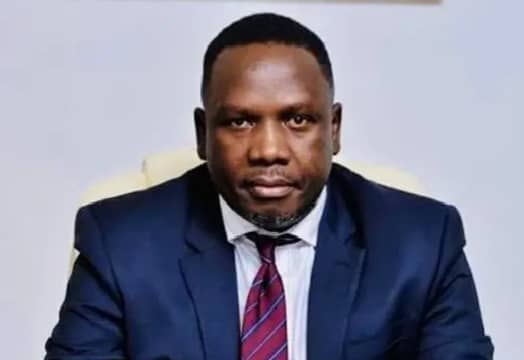
The Special Adviser to President Bola Tinubu on Media and Policy Communication, Daniel Bwala, has said the achievements of the administration in its first three years have laid the foundation for greater development if the President is re-elected in 2027.
Bwala, however, admitted that the Tinubu administration had not fulfilled all its promises to Nigerians, arguing that its reforms and policies should instead be viewed as the groundwork for a broader programme to be consolidated during a second term.
The presidential aide spoke on Thursday during an exclusive interview on Frontline, a current affairs programme on Eagle 102.5 FM, Ilese-Ijebu, Ogun State.
He said one of the administration’s major achievements was rescuing the economy from what he described as a critical situation and putting it on the path of recovery.
According to Bwala, the government’s economic reforms were necessary to restore macroeconomic stability before Nigerians could begin to feel their full impact at the household level.
“The first that I would say is that one of the achievements of Mr President is that when he came, the economy was nosediving, but he was able to rescue the economy from a very critical situation to the position where we are now, which is to move on with recovery,” he said.
Bwala said the administration had also repositioned Nigeria as an attractive destination for investment, citing increased activities in agriculture, technology, aviation and other sectors.
He added that the country’s foreign exchange reserves had risen above $40bn, while activity in the stock market remained strong.
On education, Bwala cited the Nigerian Education Loan Fund, NELFUND, and what he described as a reduction in the frequency and duration of strikes by the Academic Staff Union of Universities as evidence of progress.
He said more than one million Nigerians had benefited from NELFUND loans, adding that the programme could be expanded if government revenue increased.
“We are hoping that when we’re able to increase the revenue, we’ll expand that,” he said.
The presidential aide also said the administration had introduced several interventions in agriculture, including access to seedlings and loans, to encourage farmers and boost food production.
He said the government had similarly created a credit scheme for civil servants to enable them to acquire household appliances and other basic items and pay gradually at low interest rates.
In the aviation sector, Bwala said the Federal Government had cleared outstanding obligations owed to foreign airlines and strengthened Nigeria’s air connectivity with other countries.
He cited restored access to Dubai, increased access to the United Kingdom and a new direct flight opportunity to Brazil among the developments recorded under the administration.
On security, Bwala said Nigeria had strengthened cooperation with countries including the United States to combat terrorism, insurgency, banditry and other forms of criminality.
He linked the country’s security challenges to the wider instability in the Sahel, arguing that cross-border threats required stronger international collaboration.
Despite listing the administration’s achievements, Bwala acknowledged that Nigerians were still experiencing significant economic hardship.
He admitted that the removal of fuel subsidy and naira reforms had forced many Nigerians to adjust their lifestyles and, in some cases, pushed people already living below the poverty line into deeper hardship.
“As a Christian, there’s a verse I’m always inspired by where it says, you take your roots downward and you bear the fruit upward,” he said.
“Anytime you introduce a reform, it starts first by putting the people in a very inconvenient position because the very idea of reform, it means to reshape things.”
Bwala said tackling hunger remained one of the government’s major concerns, describing food insecurity as a national security issue.
He cited the price of rice as an example of what he described as the impact of government interventions in agriculture.
According to him, rice which previously sold for as much as N120,000 was now available for below N40,000 in some locations and around N30,000 in others.
He also said the government had removed import duties on some essential items and introduced the Compressed Natural Gas initiative to reduce transportation costs following the removal of fuel subsidy.
Bwala acknowledged that expanding such programmes nationwide required substantial funding.
He argued that limited resources and Nigeria’s large population were among the reasons why the impact of government policies had not been felt equally across the country.
The presidential aide said the administration was therefore placing greater emphasis on entrepreneurship, noting that government could not employ every Nigerian.
According to him, the government’s responsibility was to create an environment where private businesses could thrive and generate employment.
Bwala also defended government spending on the President’s aircraft and the controversial purchase of SUVs for members of the National Assembly.
He argued that the President required a reliable aircraft because of his responsibilities as Commander-in-Chief and Nigeria’s chief representative in international engagements.
On the National Assembly vehicles, he said such provisions were part of the privileges attached to lawmakers’ offices and necessary for the legislature to function effectively.
Bwala, however, noted that the administration had also taken steps to reduce the cost of governance, including reducing the number of escort vehicles attached to public officials and redirecting some police personnel previously assigned to VIP protection to areas affected by insecurity.
He maintained that the government was aware that Nigerians were primarily concerned about food, jobs, education, transportation and security rather than macroeconomic statistics alone.
Bwala said the administration’s first three years should therefore not be regarded as the completion of its promises but as the foundation for further development.
“So these are a few of the many things that this administration has achieved. But we are not by any chance suggesting that this is a fulfilment of what we promised.
“But we are suggesting to Nigeria that this is a foundation for many things that we will consolidate on if elected for the second term,” he said.
His comments come amid growing debate over the performance of the Tinubu administration, particularly whether its economic reforms and increased government revenues have translated into improved living conditions for ordinary Nigerians ahead of the 2027 presidential election.




Leave a Reply