

By George Omagbemi Sylvester
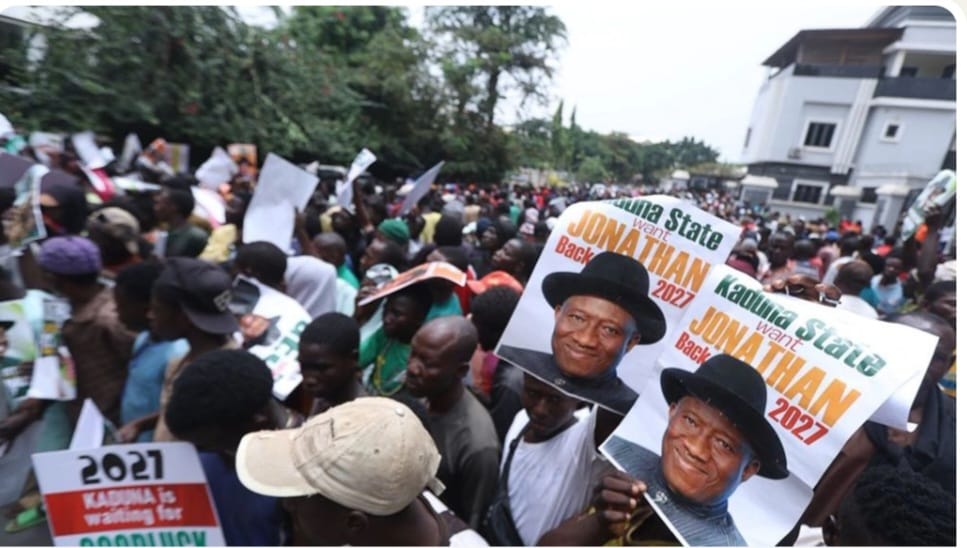
Former President Goodluck Jonathan is once again being pulled into the centre of Nigeria’s 2027 political chessboard after thousands of youths and civil society groups reportedly stormed his Abuja office, urging him to contest the next presidential election. This development was reported today, April 8, 2026, and although the message from the crowd was loud, Jonathan himself was notably absent.
The protest, according to reports, was less about spontaneous street energy and more about a growing political nostalgia for Jonathan as a “safe alternative” in an era of worsening economic hardship, insecurity, and elite distrust.
Demonstrators reportedly appealed to him to “rescue” Nigeria, reflecting a broader frustration with the current political class and a search for a familiar national figure seen by some as calmer, more unifying, and less confrontational.
The real story is deeper than the protest itself. Jonathan has not declared interest, and the speculation around his possible return has already divided political stakeholders, legal commentators, and party blocs for months.
That means what happened in Abuja may not yet be a campaign; but it is certainly a signal.
Nigeria is entering a dangerous season where desperation is beginning to masquerade as political hope.
And when a former president who has not even spoken becomes the loudest fantasy in the room, it says more about the failure of the present than the promise of the past.





Leave a Reply