
By Paul Joseph
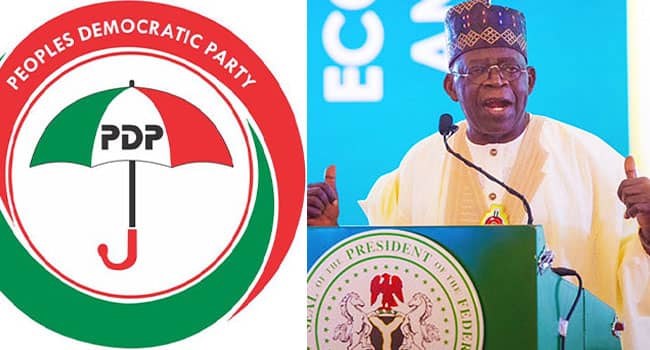
The opposition Peoples Democratic Party (PDP) has sharply criticised the administration of President Bola Ahmed Tinubu following Nigeria’s ranking as the fourth most terrorism-impacted country in the 2026 Global Terrorism Index, said “Tinubu led-government dancing on blood”.
The report, released by the Institute for Economics and Peace, shows that Nigeria, alongside four other nations, accounts for nearly 70 percent of global terrorism-related deaths.
It also recorded one of the sharpest increases in fatalities within the review period.
Reacting to the findings, the PDP described the ranking as a stark reflection of what it called a worsening security crisis under the current administration.
In a statement issued by its National Publicity Secretary, Ini Ememobong, the party said the report mirrors the “daily reality” faced by Nigerians, where insecurity has become widespread and deeply entrenched.
The opposition alleged that terrorism, banditry, and kidnapping have escalated significantly, raising concerns about the government’s capacity to effectively safeguard lives and property.
The PDP urged the All Progressives Congress-led government to abandon what it described as a pattern of reactive responses to security threats and instead adopt a more coordinated, society-wide approach.
It called for immediate actions to halt attacks described as achieving “negative peace” alongside long-term strategies aimed at fostering sustainable stability and coexistence, referred to as “positive peace.”
According to the party, Nigerians are increasingly frustrated by persistent violence and what it perceives as inadequate and slow responses from authorities.
The criticism comes amid heightened public anxiety over insecurity across parts of Nigeria, with recurring incidents of terrorism, banditry, and kidnapping for ransom.
While the Federal Government maintains that it is tackling the challenges through military operations and security reforms, critics argue that more proactive, intelligence-driven, and inclusive strategies are required to reverse the trend.
Security experts warn that Nigeria’s position on the index could have far-reaching implications, including its impact on investor confidence, national stability, and global perception.
The latest report has reignited debate over the effectiveness of current security policies and the urgent need for reforms that address both immediate threats and the root causes of violence.
As reactions continue to trail the ranking, attention is expected to focus on how the government responds to mounting pressure to improve security and restore public confidence.




Leave a Reply