
By Opeyemi Adelakun
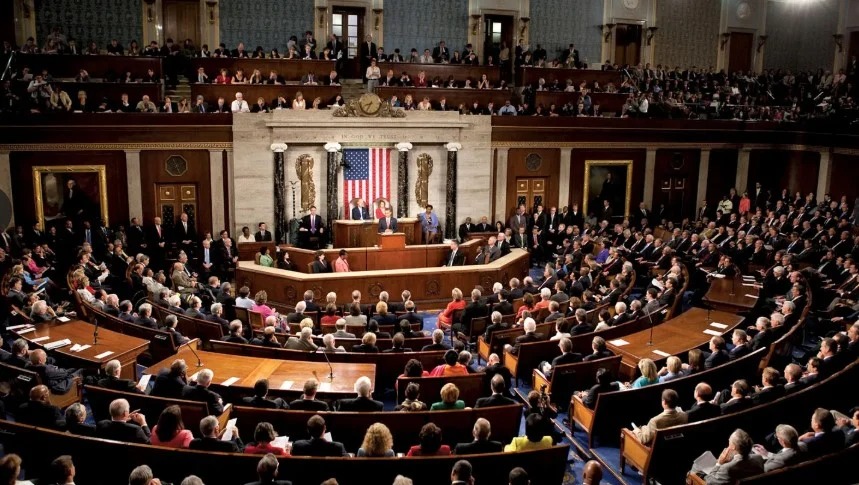
The United States House of Representatives has approved a proposal that could suspend all American assistance to Nigeria until the Federal Government demonstrates measurable progress in tackling violence and protecting vulnerable communities, including Christians.
The measure was adopted during consideration of the fiscal 2027 State Department Appropriations Bill, which the House passed on Wednesday by a vote of 217 to 209, largely along party lines.
A key amendment sponsored by Republican Congressman Gregory Steube increased the proposed restriction on U.S. assistance to Nigeria from 50 per cent to 100 per cent. If enacted, all funds allocated to Nigeria would be withheld until the U.S. Secretary of State certifies that the Nigerian government has taken effective steps to prevent violence and hold perpetrators accountable.
The original provision in the bill proposed withholding half of U.S. funding until the Federal Government met the stipulated conditions. Steube’s amendment retained the conditions but expanded the restriction to cover all U.S. assistance.
Announcing the development on X, Steube said the amendment would prevent American taxpayers from funding a government that, according to him, had failed to stop attacks against Christians.
“My amendment to withhold 100 per cent of U.S. aid to Nigeria until its government stops the slaughter of Christians has passed. American taxpayers should never bankroll governments that turn a blind eye while Christians are abducted, tortured and murdered. No more wasteful foreign aid,” he wrote.
Another Republican lawmaker, Congressman Riley Moore, said the legislation would ensure that future American assistance is tied to measurable efforts by Nigeria to protect Christians and address religious violence.
Moore alleged that Christians in Nigeria had suffered repeated attacks, killings and abductions over the years and said the provision followed investigations by U.S. lawmakers into the security situation, including visits to assess conditions on the ground.
Speaking during the House debate, Steube argued that withholding only half of the assistance would amount to rewarding failure.
“Nigeria has faced a horrific wave of violence that its corrupt government has failed to address,” he said.
He maintained that the amendment did not introduce new conditions but strengthened the existing provision by ensuring that U.S. aid would not continue without evidence of action against violence and religious persecution.
According to the lawmakers, future U.S. assistance should depend on measurable progress in protecting religious minorities, combating terrorism and ensuring accountability for those responsible for violent attacks.
Steube further claimed that Christians and other religious minorities had been subjected to violence, terrorism, kidnappings and killings by extremist groups operating with impunity.
“This is not about punishing the Nigerian people. It is about demanding accountability for their government’s complacency and ensuring that our foreign aid is leveraged to defend, reflect and uphold American values,” he added.
However, the proposal has not yet become law. It must still be approved by the U.S. Senate and signed by President Donald Trump before taking effect. As a result, the House vote does not immediately affect ongoing U.S. assistance to Nigeria.
The latest move follows President Trump’s 2025 redesignation of Nigeria as a “Country of Particular Concern” under the International Religious Freedom Act over allegations of religious persecution.
On October 31, 2025, Trump directed the U.S. Congress to investigate the situation and make recommendations after redesignating Nigeria under the Act.
The Federal Government has consistently rejected claims that Christians are being specifically targeted, insisting that both Christians and Muslims have suffered attacks from terrorists and other violent extremist groups.
Despite the concerns raised by U.S. lawmakers, Nigeria and the United States have continued to expand security cooperation, particularly in efforts to combat terrorist groups operating in parts of northern Nigeria.



Leave a Reply