
By Paul Joseph
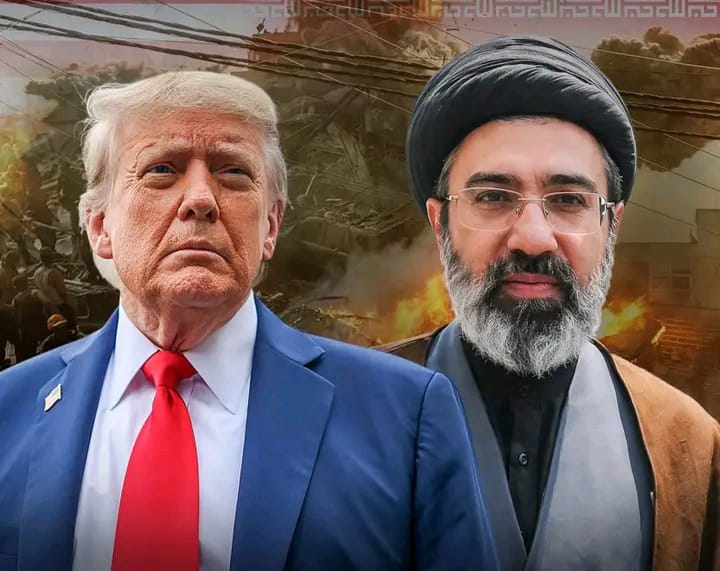
US President Donald Trump has announced plans for a sweeping naval blockade of the Strait of Hormuz following the collapse of high-stakes peace talks between Washington and Tehran in Islamabad.
In a series of strongly worded statements, Trump said the US Navy would begin “blockading any and all ships” attempting to enter or exit the critical shipping route, escalating tensions in an already volatile region.
The Strait of Hormuz is one of the world’s most vital oil and gas transit corridors, with roughly one-fifth of global oil and gas supplies passing through it daily. Any disruption is expected to have immediate global economic consequences.
The announcement came after nearly 20 hours of negotiations between US and Iranian officials in Pakistan failed to yield a breakthrough. Trump blamed the deadlock squarely on Iran’s refusal to abandon its nuclear ambitions.
“Most points were agreed to, but the only point that really mattered was not,” Trump stated, adding that Iran remains “unwilling to give up its nuclear ambitions.”
US Vice President JD Vance, who led the American delegation, confirmed that Washington had presented what it described as its “best and final offer,” but Tehran declined to accept the terms.
On the Iranian side, chief negotiator Mohammad Bagher Ghalibaf accused the US of failing to build trust, citing past conflicts as a major obstacle.
Trump further revealed that he had ordered US forces to intercept vessels suspected of paying tolls to Iran and to clear naval mines allegedly placed in the strait.
“No one who pays an illegal toll will have safe passage,” he warned, adding that any attack on US or allied vessels would be met with overwhelming force.
The move signals a sharp escalation in the ongoing standoff, raising fears of broader military confrontation in the Middle East.
The United Arab Emirates has already warned that any attempt to restrict access to the strait threatens global energy, food, and economic security, stressing that the waterway is an international route and not under the control of any single nation.
Meanwhile, violence continues elsewhere in the region, with Israeli strikes reported in southern Lebanon and mounting casualties in Iran since the conflict began earlier this year.
Despite the breakdown in talks, analysts suggest that back-channel negotiations may still be possible, with mediators hoping the fragile ceasefire could provide a window for renewed diplomacy.
However, with the US now preparing for a naval blockade, the path forward appears increasingly uncertain.






Leave a Reply