
By Paul Joseph
United States President Donald Trump has delivered one of his most forceful warnings yet to North Korea, declaring that the United States could “totally destroy” the country if provoked into defending itself or its allies.
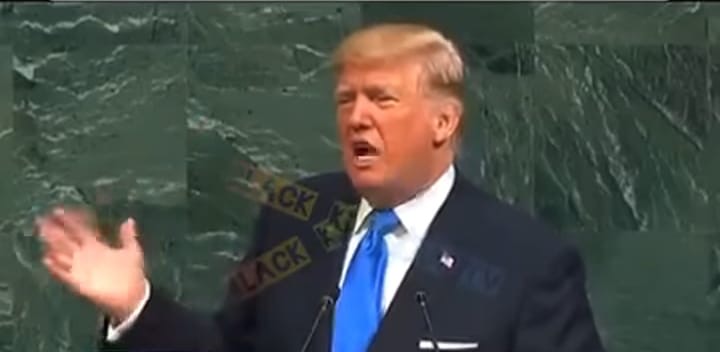
Speaking during a high-stakes address focused on global security, Trump accused Pyongyang of recklessly advancing its nuclear weapons and ballistic missile programmes, warning that these developments pose a grave danger to international stability.
“North Korea’s reckless pursuit of nuclear and ballistic missiles threatens the entire world with unthinkable loss of human lives,” he said. “The United States has great strength and patience, but if it is forced to defend itself or its allies, we will have no choice but to totally destroy North Korea.”
The remarks underscore escalating tensions between Washington and Pyongyang, which have been fueled by repeated missile tests and ongoing concerns over the regime’s nuclear ambitions.
Trump emphasized that while the U.S. prefers a diplomatic resolution, it remains fully prepared for military action if necessary.
“The United States is ready, willing, and able,” he added, reinforcing a message of deterrence aimed at curbing further provocations.
The warning is likely to draw a sharp response from North Korean leader Kim Jong Un, whose government has consistently defended its weapons programmes as essential for national security and deterrence against perceived external threats.
Security analysts say such rhetoric significantly raises the stakes, increasing fears of miscalculation in an already volatile standoff.
The situation has drawn concern from regional powers, including South Korea and Japan, both key U.S. allies that would be directly affected by any military escalation.
While diplomatic channels remain open, Trump’s comments signal a hardening stance from Washington, with the possibility of confrontation lingering if efforts to de-escalate fail.
Global observers warn that any conflict on the Korean Peninsula could have devastating humanitarian and economic consequences, making restraint and dialogue critical in the days ahead.






Leave a Reply