
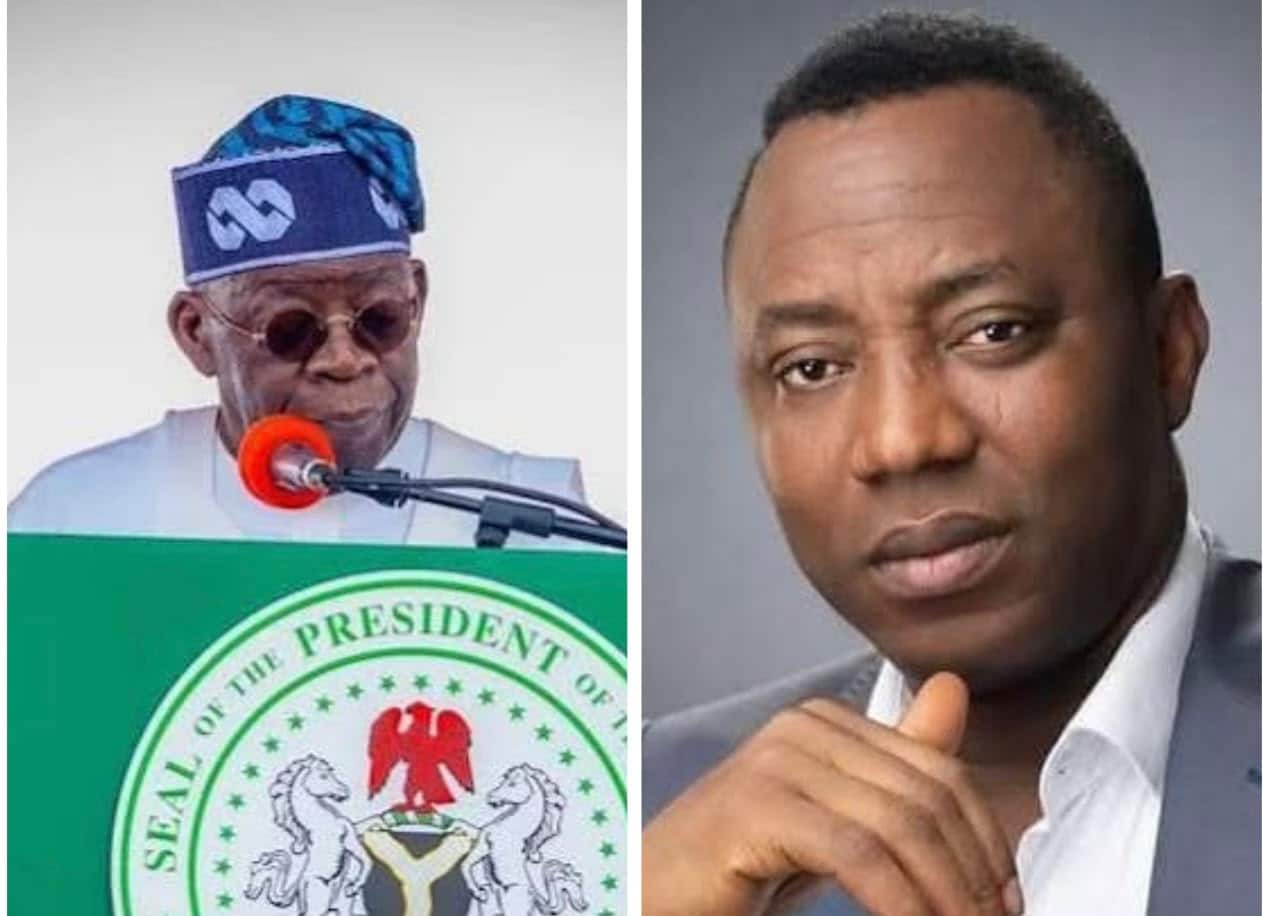

African Action Congress (AAC) presidential candidate Omoyele Sowore has accused President Bola Tinubu of copying and repackaging policy ideas he has advocated for years, following the Federal Government’s move to reform Nigeria’s cannabis laws.
Reacting to recent presidential directives on the restructuring of the country’s drug laws, Sowore alleged that politicians routinely adopt ideas proposed by progressive opposition figures without giving them credit.
“Nigeria’s incompetent politicians have developed a habit of listening to our revolutionary ideas, copying them and then repackaging them as though they invented them,” Sowore wrote on his official Facebook page.
“Now, Asiwaju Bola Ahmed Tinubu is reportedly talking about decriminalising cannabis (Indian hemp), a position we have advocated for years.”
Sowore, who campaigned on the legalisation and commercialisation of cannabis during the 2019 and 2023 presidential elections, has repeatedly argued that Nigeria could benefit from the plant’s multi-billion-dollar global market.
His comments followed President Tinubu’s request to the National Assembly to repeal the 1966 Indian Hemp Act as part of a broader review of Nigeria’s laws governing narcotics and controlled substances.
The proposed changes are not expected to amount to a blanket decriminalisation of recreational drug use. Instead, the Federal Government is seeking to replace the outdated legislation with a modern framework that would strengthen the powers of the National Drug Law Enforcement Agency (NDLEA) against illicit trafficking and drug abuse.
The move is also expected to complement proposals before the National Assembly for a strictly regulated cannabis industry focused on medicinal, pharmaceutical and industrial uses, including cultivation, processing and export.
Debate over cannabis reform has moved from the fringes of political activism into mainstream policy discussions over the past decade. Supporters of reform argue that a regulated medical cannabis industry could attract investment, create agricultural jobs and diversify Nigeria’s oil-dependent economy.
However, the NDLEA and public health advocates remain opposed to the full decriminalisation of recreational cannabis use. They have raised concerns about substance abuse and the potential pressure on the country’s mental health infrastructure.
As lawmakers consider the proposed repeal, the Tinubu administration faces the challenge of balancing the potential economic benefits of cannabis reform with public safety concerns, while opposition figures such as Sowore continue to claim ownership of the idea.



Leave a Reply