
By George Omagbemi Sylvester
Leadership is often misunderstood as a fixed position of authority, but in reality, it is a dynamic responsibility that demands constant adjustment.
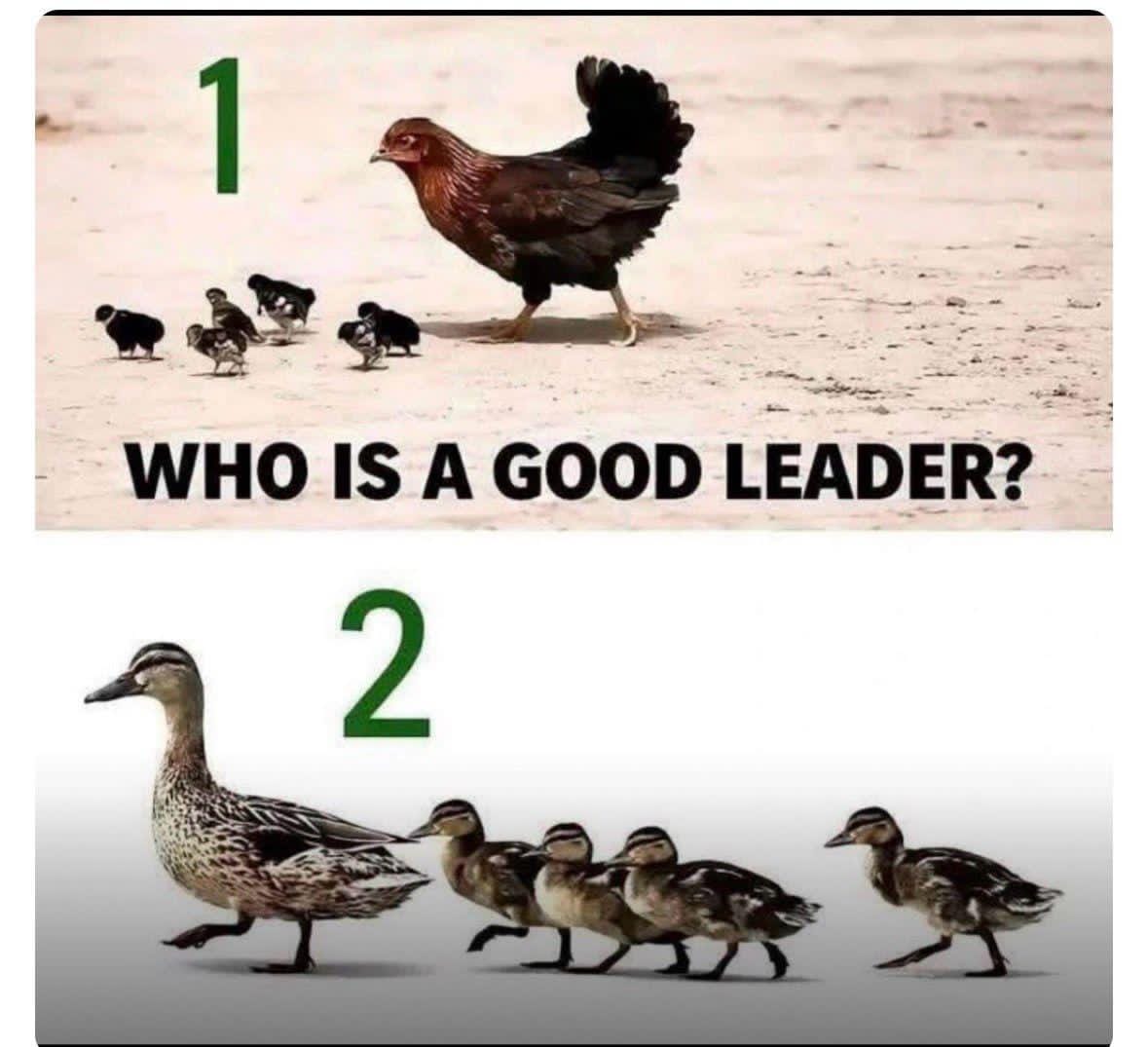
The analogy of the duck and the chicken offers a simple yet profound insight: effective leadership is not about choosing one style, but about knowing when to lead from the front and when to step back. This idea closely reflects the principles of Situational Leadership, where adaptability becomes the defining trait of a successful leader.
Leading from the front (the “duck”) is essential during uncertainty, crisis, or when a team lacks direction.
In such moments, a leader must provide clarity, set the pace, and absorb pressure to guide others forward.
On the other hand, leading from behind (the “chicken”) is equally critical when a team is experienced and capable.
Here, leadership shifts to empowerment, trust, and oversight, allowing individuals to grow while ensuring stability and cohesion.
However, true leadership goes beyond simply switching positions. It requires emotional intelligence, awareness, and the courage to relinquish control when necessary.
A leader who constantly dominates risks stifling innovation, while one who remains passive may create confusion and drift.
Ultimately, leadership is not about visibility but impact.
The most effective leaders are those who can read the moment, respond appropriately, and balance authority with humility. In today’s complex world, the ability to be both the duck and the chicken is not optional; it is essential.




Leave a Reply