
By Paul Joseph
Scientists have confirmed the discovery of a new species of trapdoor spider on a small island in Mauritius, astonishing conservationists because of its unusual habitat along a rocky coastline.
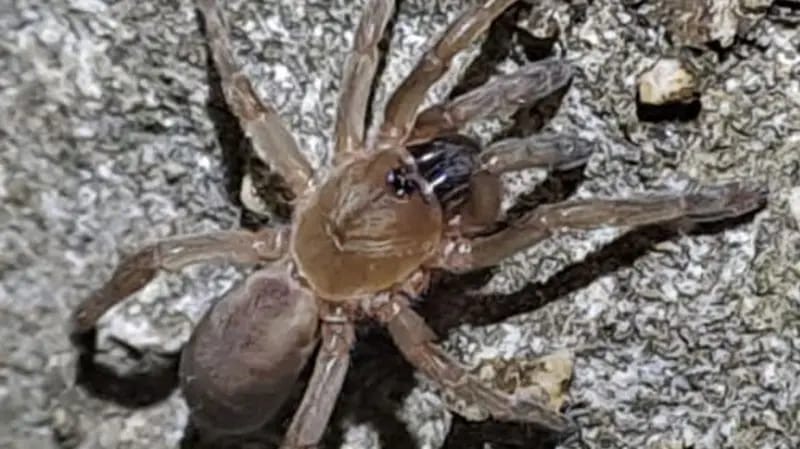
The spider, named the Mauritian tidal trapdoor spider (Idioctis marevallum), was discovered in 2023 by Dr Max Tercel, an entomologist working with Jersey-based Durrell Wildlife Conservation Trust and its partners on Ilot Vacoas, a Mauritian island.
Tercel described the discovery as being like uncovering a “hidden treasure”, saying he was stunned to find the spider in an environment where he had not expected to encounter such a species.
According to him, the discovery occurred after dark while he was searching through crevices along a stretch of coastal rock with sparse vegetation.
He noticed the spider’s legs extending from its burrow, a sight he had previously encountered only in lush forests and grasslands.
The Durrell Wildlife Conservation Trust said the species has an unusual way of making its home compared with other trapdoor spiders, which typically dig their own burrows.
Instead, the Mauritian tidal trapdoor spider inhabits tubes in coralline bedrock believed to have been formed by worms and molluscs thousands of years ago.
The spider seals the entrance to its shelter with a trapdoor made from silk, sand and algae, enabling it to live in a habitat that becomes completely submerged at high tide and is repeatedly battered by waves.
Nik Cole, Mauritius country manager at Durrell, described the discovery as “incredibly exciting”.
Cole recalled how Tercel urgently called him over after spotting the spider, which belongs to the mygalomorph group of spiders that includes tarantulas.
He said he was surprised that a spider from the same group as tarantulas could survive in such an unusual coastal environment.
Cole added that he stayed awake throughout the night trying to obtain a phone signal and searching for evidence of similar spiders previously recorded in Mauritius.
The discovery highlights the importance of conservation research in identifying previously unknown species and understanding how wildlife adapts to challenging environments.
It also provides scientists with an opportunity to investigate how the Mauritian tidal trapdoor spider survives in a habitat exposed to tidal fluctuations and persistent wave action.






Leave a Reply