

By Opeyemi Adelakun
Nigeria’s post-subsidy revenue boom has yet to translate into meaningful fiscal independence for most state governments, with 26 of the 34 states reviewed in a new BudgIT analysis unable to generate enough internally to meet their personnel costs in 2025.
The finding exposes a paradox at the heart of Nigeria’s ongoing economic reforms: while states are receiving substantially more money from the Federation Account, many remain unable to sustain their wage bills from their own revenue bases.
BudgIT’s report, Nigeria’s Economic Reforms: What Has Changed Across Nigeria’s States? An Analysis of State Finances in the Post-Subsidy Years, showed that only eight states generated IGR above their personnel expenditure during the year.
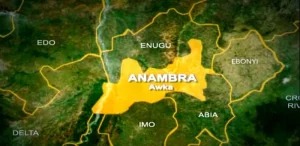
They were Lagos, Enugu, Ogun, Delta, Kaduna, Kwara, Abia and Anambra.
The other 26 states collectively generated approximately N1.16tn in IGR but spent about N1.91tn on personnel, creating a deficit of roughly N747bn.
The report analysed actual figures from state full-year budget implementation reports for 2022 and 2025. Akwa Ibom and Rivers were excluded because of incomplete or unavailable data.
The figures do not suggest that states should finance their entire operations from IGR alone. Statutory allocations remain a legitimate source of government revenue.
Rather, the data reveals how vulnerable several states remain to disruptions in federal transfers, particularly when their internally generated revenue cannot even cover personnel obligations.
That vulnerability has become more striking because the reforms introduced since 2023 have significantly increased the resources available to the three tiers of government.
FAAC Growth Outpaces States’ Own Revenue
BudgIT reported that aggregate FAAC allocations rose from N3.43tn in 2022 to N11.38tn in 2025, representing a 232.06 per cent increase and a compound annual growth rate of 50.2 per cent.
Over the same period, aggregate IGR increased from N1.57tn to N4.15tn.
Although the rise was substantial, IGR grew by 165.01 per cent, with a compound annual growth rate of 38.38 per cent, meaning federal transfers expanded considerably faster than states’ own revenue.
The consequence was an increase, rather than a reduction, in the importance of FAAC to state finances.
FAAC accounted for 68.7 per cent of aggregate state revenue in 2022 but climbed to 73.3 per cent in 2025.
The contribution of IGR moved in the opposite direction, falling from 31.4 per cent to 26.7 per cent.
BudgIT observed that “despite improvements in domestic revenue mobilisation, many states remained heavily reliant on transfers from the Federation Account.”
The organisation added, “Although statutory allocations accounted for a larger share of the overall increase in revenues, strengthening domestic revenue mobilisation remains essential for improving long-term fiscal sustainability and reducing dependence on federal transfers.”
Lagos Masks The Depth Of The Problem
The aggregate figures are heavily influenced by Lagos, whose exceptional revenue performance significantly lifts the overall IGR of the states studied.
Lagos generated N1.85tn in IGR in 2025, compared with N656.35bn in 2022.
Its 2025 IGR represented about 44 per cent of the N4.15tn generated collectively by the 34 states assessed.
The state spent N333.67bn on personnel, meaning its internally generated revenue was more than five times its personnel expenditure.
Enugu generated N406.77bn against personnel expenditure of N56.40bn, while Ogun recorded N237.65bn in IGR against N151.27bn in personnel costs.
Delta generated N206.44bn compared with N197.81bn in personnel expenditure.
Kaduna generated N86.72bn against N77.63bn in personnel costs, while Kwara recorded N85.21bn in IGR against N65.22bn.
Abia generated N66.86bn compared with N62.26bn in personnel expenditure, while Anambra recorded N54.24bn against N39.95bn.
But when Lagos is removed from the calculation, the underlying weakness becomes clearer.
The other 33 states generated approximately N2.30tn in IGR in 2025 against combined personnel expenditure of about N2.56tn, leaving a gap of roughly N254bn.
Wage Bills Expose States’ Fiscal Weakness
The widest disparities occurred in states with relatively small revenue bases and substantial personnel obligations.
Yobe generated N15.42bn in IGR but spent N76.34bn on personnel, leaving a gap of N60.91bn.
Taraba generated N17.89bn against personnel costs of N55.60bn, while Sokoto raised N20.58bn against N58.65bn in personnel expenditure.
Adamawa generated N24.14bn internally but spent N65.73bn on personnel.
Jigawa recorded N35.27bn in IGR against personnel expenditure of N92.66bn, while Benue generated N29.38bn against N73.94bn.
Kogi’s N36.50bn IGR was dwarfed by personnel expenditure of N89.20bn, while Kebbi generated N18.41bn compared with N44.82bn in personnel costs.
The other states where personnel expenditure exceeded IGR included Bauchi, Bayelsa, Borno, Cross River, Ebonyi, Edo, Ekiti, Gombe, Imo, Kano, Katsina, Nasarawa, Niger, Ondo, Osun, Oyo, Plateau and Zamfara.
Oyo recorded the largest absolute gap, with N102.52bn in IGR against N170.04bn in personnel spending, a difference of approximately N67.51bn.
Yobe followed with N60.91bn, while Jigawa recorded N57.39bn.
Ondo’s personnel expenditure of N99.58bn exceeded its N45.63bn IGR by N53.94bn, while Kogi had a N52.70bn gap.
Bayelsa generated N52.15bn against N98.75bn in personnel expenditure, leaving a N46.60bn difference.
Some States Are Beginning To Turn The Corner
Despite the overall dependence, the data also shows signs of improvement in some states.
In 2022, 28 of the 34 states analysed had personnel expenditure above their IGR. By 2025, that number had fallen to 26.
Abia, Delta, Enugu and Kwara moved from having insufficient IGR to cover personnel expenditure in 2022 to crossing that threshold by 2025.
However, Ebonyi and Jigawa moved in the opposite direction.
Edo came particularly close to balancing its personnel costs, generating N98.45bn in IGR against N99.27bn in personnel expenditure.
Gombe generated N36.36bn compared with N53.95bn in personnel spending, while Osun recorded N58.80bn in IGR against N87.46bn in personnel costs.
Enugu’s Revenue Surge Raises Questions
Enugu recorded the most dramatic IGR increase during the period.
Its internally generated revenue jumped from N25.12bn in 2022 to N406.77bn in 2025, an increase of N381.66bn and a compound annual growth rate of 153.01 per cent.
BudgIT, however, linked much of the increase to proceeds collected by the Enugu State Housing Development Corporation following the state government’s intervention in the landed property market.
The organisation raised concerns about the classification of the revenue and its potentially cyclical character.
Niger recorded the second-fastest growth, with IGR rising from N12.11bn to N66.37bn, while Abia increased from N14.67bn to N66.86bn.
Three states recorded declines.
Jigawa’s IGR fell from N59.40bn in 2022 to N35.27bn in 2025. Sokoto declined from N23.60bn to N20.58bn, while Ebonyi dropped marginally from N23.89bn to N23.25bn.
Jigawa’s situation was particularly worrying because its IGR fell while personnel expenditure climbed from N52.37bn in 2022 to N92.66bn in 2025.
Oyedele, Economists Demand New Fiscal Approach
The figures have reinforced calls for state governments to expand their revenue bases, attract investment and reduce their dependence on federal transfers.
The Minister of Finance and Coordinating Minister of the Economy, Taiwo Oyedele, recently called for stronger fiscal federalism, improved revenue generation and economic diversification to make the country more resilient to economic shocks.
Oyedele spoke in Owerri, Imo State, at the 2026 National Council on Finance and Economic Development Retreat, themed, “Strengthening Fiscal Federalism for Equity, Sustainable Development and Economic Resilience in a Volatile Global Economy.”
He called for an interrogation of the existing allocation and derivation principles while urging greater fiscal responsibility, accountability and cooperation among the three tiers of government.
The minister also urged state governments to strengthen IGR, attract investments and create jobs rather than rely heavily on federal allocations.
Imo State Governor, Hope Uzodimma, represented at the event by his deputy, Chinyere Ekomaru, similarly argued that states must be empowered to raise more revenue and manage available resources efficiently.
She stressed that continued dependence on oil revenue was no longer sustainable.
Economist and former Vice-Chancellor of the University of Uyo, Prof. Akpan Ekpo, also called for a new approach to state revenue generation.
Ekpo said, “states have to think of new ways of increasing their IGRs.”
He argued that states could raise more revenue by improving service delivery and creating conditions capable of attracting economic activity.
The Chief Executive Officer of the Centre for the Promotion of Private Enterprise, Muda Yusuf, warned that the fiscal weakness of many states could become a major problem without stronger investment inflows.
He said, “This issue is a fiscal sustainability problem, showing that many states are not fiscally sustainable and need to work towards it; and that the states need to do a lot more to attract more investments to their states so that their level of dependence on the Federal Allocation Accounts Committee would reduce.”
Yusuf also criticised the size of the bureaucracy and the number of political appointments in many states.
“Most of these states have heavy overhead and they have very bloated bureaucracy, political appointees and they are putting a lot of pressure on their resources, so they have to do some rationalisation on their staff, many of them don’t need more than 50 per cent of their workforce but for political reasons, they put all manner of characters on their payroll including the local government,” he said.





Leave a Reply