

By George Omagbemi Sylvester
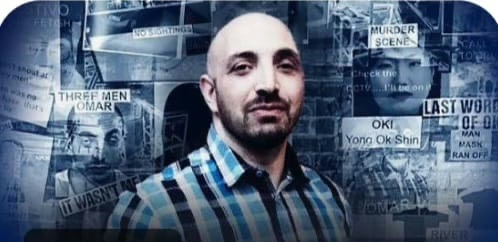
A landmark BBC Panorama investigation has unearthed compelling new evidence suggesting that Omar Benguit, a British man who has spent 23 years in prison for murder, may have been the victim of a deliberate police framing, rather than a legitimate criminal conviction. The documentary, broadcast in February 2026, throws a harsh spotlight on how evidence was handled and raises urgent questions about police conduct and the institution of justice itself.
The victim in the case was Jong‑Ok Shin, a 26‑year‑old South Korean language student (affectionately known as Oki) who was stabbed to death while walking home from a nightclub in Bournemouth, Dorset in December 2002. After two jury hung trials, Benguit was convicted in January 2005 and sentenced to life imprisonment with a minimum term of 20 years.
For more than two decades, the conviction rested not on physical or forensic evidence, but primarily on testimony from witnesses whose reliability is now being dismantled. Panorama’s reporting reveals that at least 13 prosecution witnesses have now told journalists that police pressured them to embellish or falsify their statements and at times while they were in vulnerable states, including addiction or youth.
Most disturbingly, the investigation suggests that police were aware early on that the account of the key witness (identified only as “BB” for legal reasons) was directly contradicted by CCTV footage, yet relied heavily on her testimony to secure a conviction. BB claimed she had driven Benguit and two others past Oki before the killing and later to a “crack house,” but no surveillance images supporting her story were ever produced at trial.
Even more incriminating, phone records and CCTV footage previously overlooked or undisclosed appear to place someone resembling Benguit at a phone box 25 minutes after the murder, which directly contradicts the prosecution’s timeline and BB’s account and suggests an alternative alibi that was at least known to investigators during the original inquiry.
Legal commentators and experts have reacted with shock. Des Jenson, Benguit’s lawyer, told the BBC that if police coerced witnesses into lying, “it would mean they fabricated evidence and perverted the course of justice.” A retired senior homicide detective, Brian Murphy, called for a fresh investigation by the Independent Office for Police Conduct, saying: “This undoubtedly requires revision.”
The BBC investigation also details how all 15 key prosecution witnesses are now either discredited or have had their testimony seriously questioned, undermining what should have been a watertight case. Critically, there was never any forensic evidence linking Benguit to the murder, and no CCTV showing him committing the crime. The prosecution’s reliance on testimonies that have since unraveled casts profound doubt on the integrity of the conviction itself.
Complicating matters further is the revelation that a suspected serial killer, Danilo Restivo, who lived close to the scene at the time, was dismissed early in the police investigation despite warnings from Italian authorities. Restivo later went on to commit other murders, yet was not properly scrutinised in Shin’s case, an oversight that some experts see as a glaring failure of judgment.
The Criminal Cases Review Commission (CCRC), which reviews potential miscarriages of justice, is currently reassessing Benguit’s conviction in light of the Panorama findings. Earlier appeals by Benguit had been rejected, but this fresh evidence could overturn a conviction that now resembles systemic injustice more than judicial triumph.
This case resonates far beyond Bournemouth. “When police and prosecutors prioritize conviction over truth,” says Dr. Samuel Gross, a leading wrongful‑convictions scholar at the University of Michigan, “they risk destroying lives and undermining public confidence in the justice system.” In wrongful conviction cases worldwide, common malpractice (from coerced testimony to ignored alibis) repeatedly emerges as a pattern, not an anomaly.
Critically, the Panorama investigation underscores the human cost of such failings. Benguit, now 53 and clean of drugs, has consistently maintained his innocence. Offers of accelerated parole were reportedly contingent on admitting guilt, a choice he refuses to make on principle, telling the BBC: “I’d rather die in prison saying I didn’t do it, than get released now saying that I did.”
The implications of this case are seismic. If Benguit’s conviction is overturned, it will not only free a man likely wrongfully imprisoned for most of his adult life but will have serious ramifications for historical police practices in the UK, the review mechanisms designed to catch such miscarriages and international perceptions of British justice.
For a global audience, this story is not just about one man’s vindication or one police force’s errors: it is a stark reminder of the fragile balance between state power and individual rights and how easily that balance can be upended when truth is obscured by institutional imperatives.





Leave a Reply