

By Paul Joseph
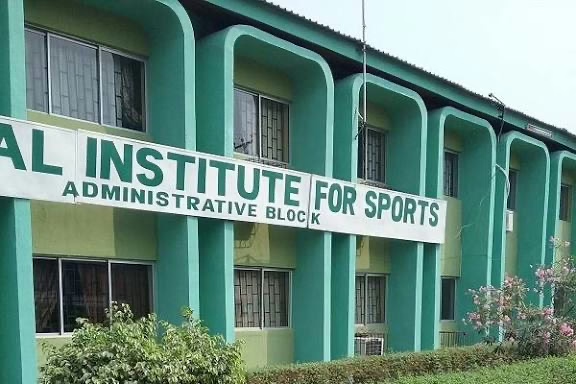
The future of sports in Nigeria is in grave danger due to ongoing financial shortfalls, according to Mr. Philip Shuaibu, the Director-General of the National Institute for Sports (NIS). Shuaibu raised this concern on Wednesday in Abuja while presenting the institute’s budget proposal for 2026 to the House of Representatives Committee on Sports. He emphasized that without consistent financial support, Nigeria may find it challenging to compete effectively on both continental and global stages.
He pointed out that despite Nigeria’s wealth of sporting talent, inadequate and inconsistent funding has hindered efforts to establish a robust and sustainable sports development system.
“Our mission is to train personnel for the sports ecosystem and promote sports from the grassroots level,” Shuaibu stated.
“However, we cannot accomplish this without sufficient government funding. We require a budget that aligns with our vision and mission to enhance sports in Nigeria.”
Shuaibu characterized the NIS as the foundation of sports development in the country, highlighting its crucial role in training coaches, sports administrators, and technical staff who drive excellence in various sports disciplines.
The former Deputy Governor of Edo State expressed concern that years of underfunding have limited the institute’s operations, delayed infrastructure improvements, restricted outreach programs, and weakened capacity-building efforts nationwide.
“Without ongoing financial support, Nigeria will struggle to compete effectively at both local and international levels,” he warned.
“If we neglect to invest strategically in sports education and development, the repercussions will be evident in our performance.”
Shuaibu praised President Bola Tinubu and the members of the House Committee on Sports for their support thus far but urged for increased budget allocations in the 2026 fiscal year to revitalize the sector.
He also called for the swift establishment of the National Sports Commission board, deeming it essential for providing strategic direction, institutional stability, and policy continuity in the sector.
“A well-formed board will help reposition the sector and ensure continuity in policy execution,” he added.
In response, Mr. Kabiru Amadu, Chairman of the House Committee on Sports, acknowledged the funding challenges facing the institute and recognized the NIS as a vital component of Nigeria’s sports framework.
Amadu emphasized the importance of enhanced budgetary support to enable the institute to fulfill its responsibilities effectively, assuring that the committee would collaborate with relevant stakeholders to improve funding for optimal performance.
Founded in 1974, the NIS is Nigeria’s leading training and research institution for sports development, tasked with producing qualified coaches, sports administrators, and technical experts to strengthen the sports sector.





Leave a Reply