

By George Omagbemi Sylvester
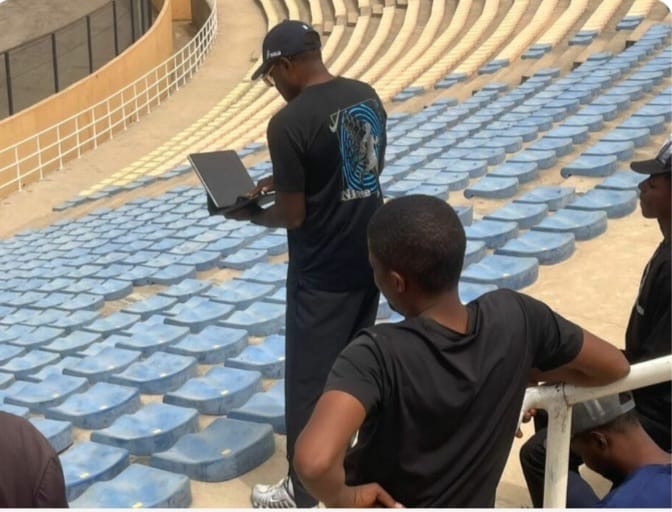
Nigeria’s football infrastructure has come under renewed scrutiny following a stark warning from stadium construction and facility management expert, Ebi Egbe, Chief Executive Officer of Monimichelle Sports Facility Construction Limited, who cautioned that several Nigerian stadia risk sanctions from global football authorities over substandard seating and deteriorating safety conditions.
Egbe’s intervention comes amid growing concerns that key venues used for domestic league matches and continental fixtures are failing to meet the strict safety and facility standards prescribed by FIFA and the Confederation of African Football (CAF). Both bodies enforce detailed regulations covering seating quality, structural integrity, spectator safety, media facilities, and emergency access systems as prerequisites for hosting sanctioned competitions.
The warning follows a pattern of recent stadium closures and conditional approvals across Nigeria. Over the past few seasons, CAF has withdrawn approval for several Nigerian venues for continental matches due to deficiencies ranging from poor pitch quality to inadequate seating and crowd control measures. In multiple instances, Nigerian clubs have been compelled to relocate home fixtures to alternative grounds deemed compliant with CAF standards.
According to Egbe, the seating crisis is not cosmetic but structural. Many stadium seats, he noted, are broken, improperly installed, or below internationally accepted safety benchmarks. “When seating collapses or fails under pressure, it becomes a safety hazard. International football today is governed by strict compliance frameworks. Non-compliance is not negotiable,” he warned, stressing that failure to act could trigger bans on affected venues.
Football governance experts argue that the implications extend beyond aesthetics. Professor Simon Chadwick, a respected global sports economy scholar, has consistently maintained that “sports infrastructure is both a commercial asset and a national brand statement.” Substandard facilities, he argues, undermine credibility and investor confidence. Similarly, sports policy analyst Dr. Bamidele Ojo notes that regulatory enforcement by FIFA and CAF is rooted in spectator safety, adding that “stadium tragedies in global football history reshaped governance standards permanently.”
Nigeria’s most prominent facilities (including the Moshood Abiola National Stadium in Abuja and major state-owned arenas) have undergone intermittent renovations in recent years, yet concerns persist over maintenance culture, procurement transparency, and long-term infrastructure planning. Observers say the problem is systemic: contracts are often awarded without sustained maintenance frameworks, resulting in rapid deterioration.
The stakes are high. Should FIFA or CAF impose sanctions, Nigerian clubs and national teams could be forced to host international matches abroad, incurring financial losses and reputational damage. Such outcomes would compound existing challenges within the Nigeria Professional Football League and weaken the country’s continental competitiveness.
What is clear is that the issue is no longer theoretical. It involves stadium managers, state governments, contractors, the Nigeria Football Federation, and continental regulators. The warning serves as both a technical and institutional alarm: without urgent compliance upgrades, Nigeria risks forfeiting not just hosting rights, but standing within African and global football governance.
The question now is not whether standards exist (they do) but whether those responsible will act swiftly enough to meet them.






Leave a Reply