
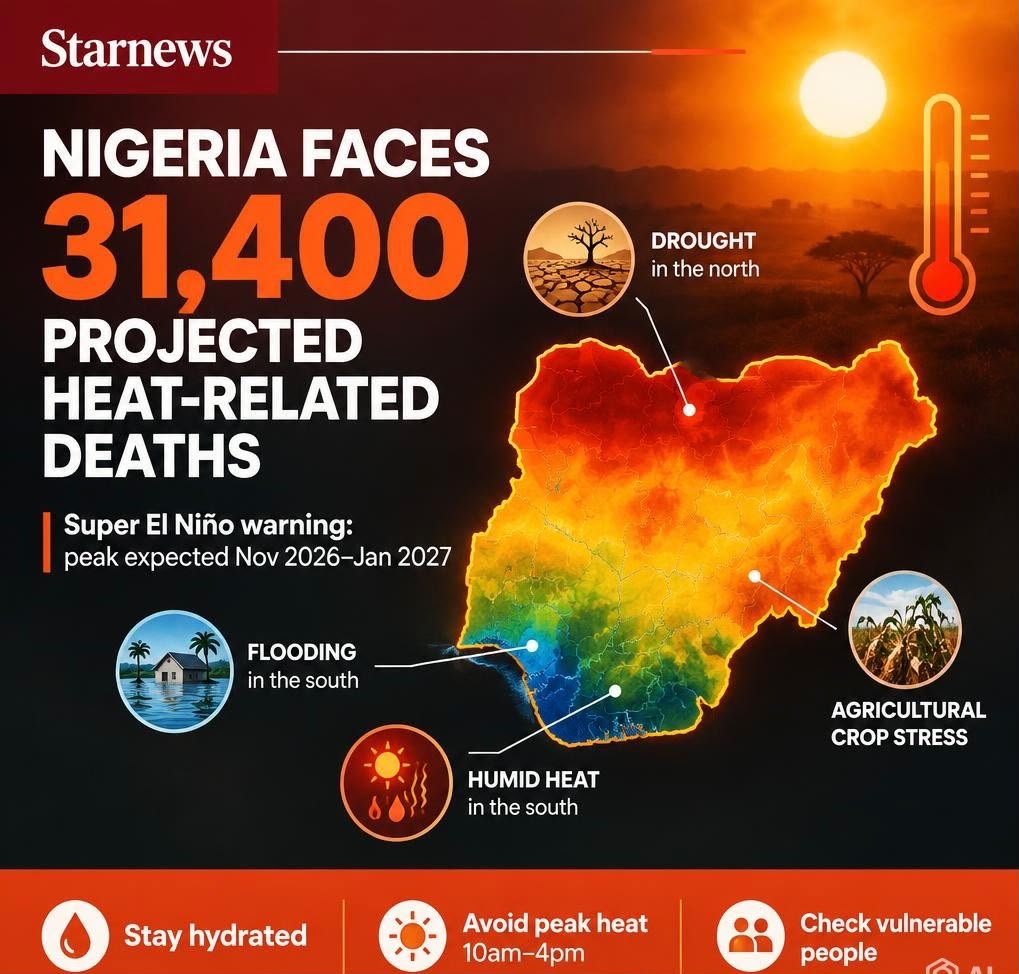
Nigeria could record an estimated 31,400 additional heat-related deaths as an intensifying “Super El Niño” weather pattern combines with the effects of human-induced climate change, according to a global study by the Climate Impact Lab.
The World Meteorological Organisation (WMO) projects that the climate phenomenon will peak between November 2026 and January 2027. Nigeria is expected to record the highest number of heat-related deaths among the countries affected during the current cycle.
The Nigerian Meteorological Agency (NiMet) has already recorded extreme temperatures, including 41°C in Nguru, Yobe State, and 34°C in coastal Lagos. Nearly half of the projected heat-related deaths across the Sahel region are expected to occur in Nigeria.
The forecast has raised concerns about public health, agriculture, water supplies and electricity demand across the 36 states and the Federal Capital Territory.
Regional risks
Northern states are facing intense heatwaves and prolonged dry spells, placing additional pressure on water resources, livestock and electricity networks.
In the southern and coastal regions, residents may experience unpredictable rainfall, sudden downpours and flash flooding, followed by periods of intense and humid heat.
Farmers across the country also face disruptions to traditional planting calendars, with changing rainfall patterns threatening crop yields and food security.
Public safety measures
Health authorities are advising residents to drink clean water regularly and reduce their intake of alcohol and highly sugared beverages. Strenuous activities and outdoor work should be limited between 10am and 4pm, where possible.
Employers are encouraged to provide shaded rest areas and regular breaks for workers who must remain outdoors. Families should also pay close attention to infants, older people and those living with cardiovascular or respiratory conditions.
Warning signs of heat exhaustion include excessive sweating, rapid heartbeat, dizziness, headaches, nausea and muscle cramps.
Affected persons should be moved to a cool, shaded place and given immediate attention to prevent heatstroke.
Farmers are advised to follow updated forecasts from NiMet and agricultural extension services rather than relying solely on traditional planting dates. Water should be stored safely in covered containers, while mulching can help preserve soil moisture and protect crops during dry spells.
The projected conditions underline the need for coordinated action by government agencies, health institutions, employers, farmers and communities to reduce the impact of extreme heat and protect lives and livelihoods.






Leave a Reply