
By Ameh Sunday Enyo-ojo
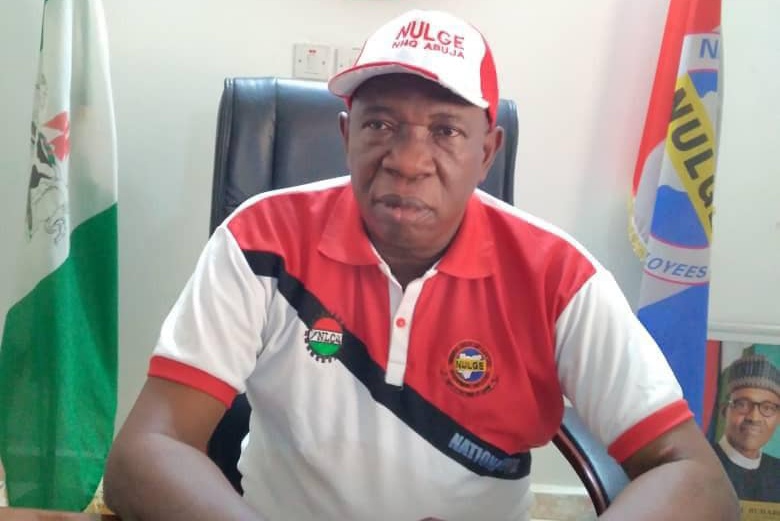
Former National President of the Nigeria Union of Local Government Employees (NULGE), Comrade Akeem Ambali, has criticised the continued poor performance of local governments in Nigeria, saying the Supreme Court judgment on financial autonomy has yet to translate into effective grassroots governance.
Ambali said local councils remained largely ineffective despite the legal victory on autonomy, arguing that communities could not experience meaningful development without functional and financially independent local governments.
He spoke on Tuesday during an interview in Ogun State, where he examined the challenges confronting grassroots administration.
The former NULGE president described local government as the neighbourhood tier of administration, which should serve as the closest point of contact between government and ordinary citizens.
He commended President Bola Tinubu for pursuing local government autonomy and securing the Supreme Court judgment, but questioned why the development had not resulted in visible improvements in communities.
Ambali said, “And because I commend President Tinubu, that was one of the agreements he reached before he was elected. He came in, we didn’t know how he’s going to go about it. We were thinking the normal route through parliamentary and what are doing. But the man took a different route and achieved what he missed.”
He, however, lamented that local governments remained ineffective despite the judgment.
“But why Nigerians are not happy is that the issue of local government, which is the neighbourhood government, that’s supposed to service the grassroots to make the impact of Tinubu administration more positive, is missing in action,” he said.
He urged Nigerians to make the implementation of the Supreme Court judgment a major issue when assessing political parties and candidates ahead of the next general election.
According to him, voters should demand clear commitments on how candidates intend to restore functional local government administration rather than rely on political promises.
Ambali said councils should be empowered to maintain rural roads, support agricultural production, provide basic infrastructure and strengthen community-level security.
He lamented that deteriorating rural roads had made it difficult for farmers to transport their produce to markets, recalling that local governments previously had graders, excavators and other equipment for maintaining community infrastructure.
“The roads are not passable. Farmers cannot bring back farm produce. Local government in the past has graders, had boilers, evacuators, has so many equipments that easily a community can afford,” he said.
He also called for improved management of agricultural interventions, urging councils to maintain reliable databases of farmers to ensure that tractors, fertilisers and other support reached genuine beneficiaries.
The former labour leader maintained that autonomy should go beyond the release of funds to restoring the administrative capacity of councils to deliver essential services.
He questioned why communities continued to experience poor infrastructure despite the increased allocations reportedly accruing to local governments.
“A local government that has about 200 million, for God’s sake, no matter how drunk that chairman can be, he will still impact his people positively. But what is wrong with Nigeria is a local government that is missing in action,” he said.
Calls for accountability and better administration
Responding to a caller who questioned the performance of local government employees and the use of key performance indicators, Ambali argued that workers should not be assessed without considering the resources and institutional support available to them.
Using Eagle 102.5 FM as an example, he said employees could hardly deliver effectively if management failed to provide essential resources such as electricity, operational funding and other facilities.
He also explained that local government workers were not necessarily expected to remain within council secretariats throughout the working day, as many performed duties in hospitals, agricultural locations and rural communities.
Citing his experience as a former director of community development, Ambali recalled visiting communities including Iloti, Irawo, Obete, Abule Sikiru and Alabata as part of his official responsibilities.
He argued that grassroots administration required regular engagement with residents and that field activities should be considered when evaluating workers’ performance.
Ambali further recalled that local governments were more active during the Babangida era, alleging that political interference had gradually weakened their independence and administrative capacity.
He said the problem was not that local governments were incapable of delivering services but that years of interference had crippled their operations.
The former NULGE president also argued that government programmes could fail to reach their intended beneficiaries without functional local councils.
Citing the distribution of Compressed Natural Gas buses, he said effective grassroots administration was necessary to connect government interventions with the communities they were intended to serve.
He said, “Tinubu has a good vision for the country. He has a good programme. But how to connect the people is missing. And that is a function.”
Ambali said he had sympathy for Tinubu because of his efforts towards local government autonomy, but insisted that the President should be held accountable for completing the process.
“As of today, because of local government autonomy, I have sympathy for Tinubu. That is the truth. I am a comrade, I don’t lie. Because I believe, if miraculously, he wins the election, he will be held accountable for what he has started,” he said.
He nevertheless maintained that the implementation of the Supreme Court judgment should not be subjected to electoral calculations or political interests.
Ambali urged Nigerians to demand functional, accountable and independent local governments, stressing that national development would remain limited without effective grassroots administration.
He said the success of local government autonomy should ultimately be measured by improved roads, functioning public facilities, agricultural support, community security and accessible services rather than declarations of commitment.






Leave a Reply