
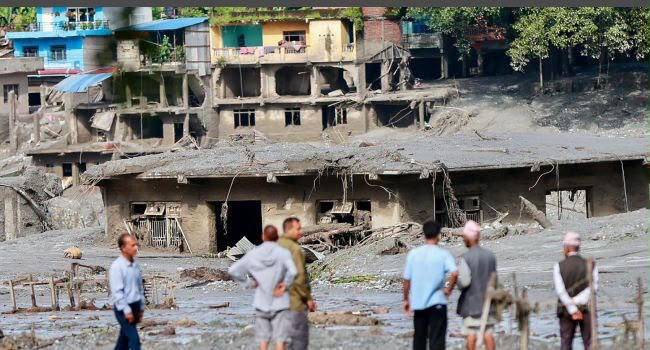

The cause of the deadly landslide and flood along the Nepal-Tibet border remains under investigation, but experts point to a combination of extreme topography and climate change as major factors compounding the danger. The disaster has resulted in at least 165 deaths and the destruction of entire villages.
While initial reports suggested a magnitude 4.4 earthquake had triggered a landslide that blocked a river, the US Geological Survey has since updated its assessment. Additional analysis of seismic waves indicates the energy was actually generated by a glacial collapse and subsequent debris flow.
Researchers emphasize that the region faces growing hazards from a warming planet, including heat waves, glacial retreat, and permafrost reduction. Dorothy Heinrich, a researcher at the University of Reading, noted that these trends are known to drive events such as glacial lake outburst floods (GLOFs)—the sudden release of vast volumes of water from melting glacier-fed lakes.
A preliminary assessment by the Kathmandu-based International Centre for Integrated Mountain Development (ICIMOD) suggests that a rock-ice avalanche occurred in Nepal, blocking the Lhende River and causing a cascading flood. Sarthak Shrestha, an analyst with the institute, confirmed they found no anomalies on the Chinese side of the border.
Hydrologist Hatim Sharif of the University of Texas San Antonio highlighted the lack of rainfall preceding the event, noting that this “defeats essentially every operational flood warning system in the world.” He described the rapidly moving mud and water as a lethal force “like liquid concrete,” stating that the only viable escape is to climb to higher ground.
As officials monitor the region, Qianggong Zhang, head of climate and environmental risks at ICIMOD, has warned of the potential for a secondary flood due to an ongoing blockage upstream. Experts suggest that long-term mitigation could include real-time river level gauges to provide residents with critical minutes of warning.






Leave a Reply