
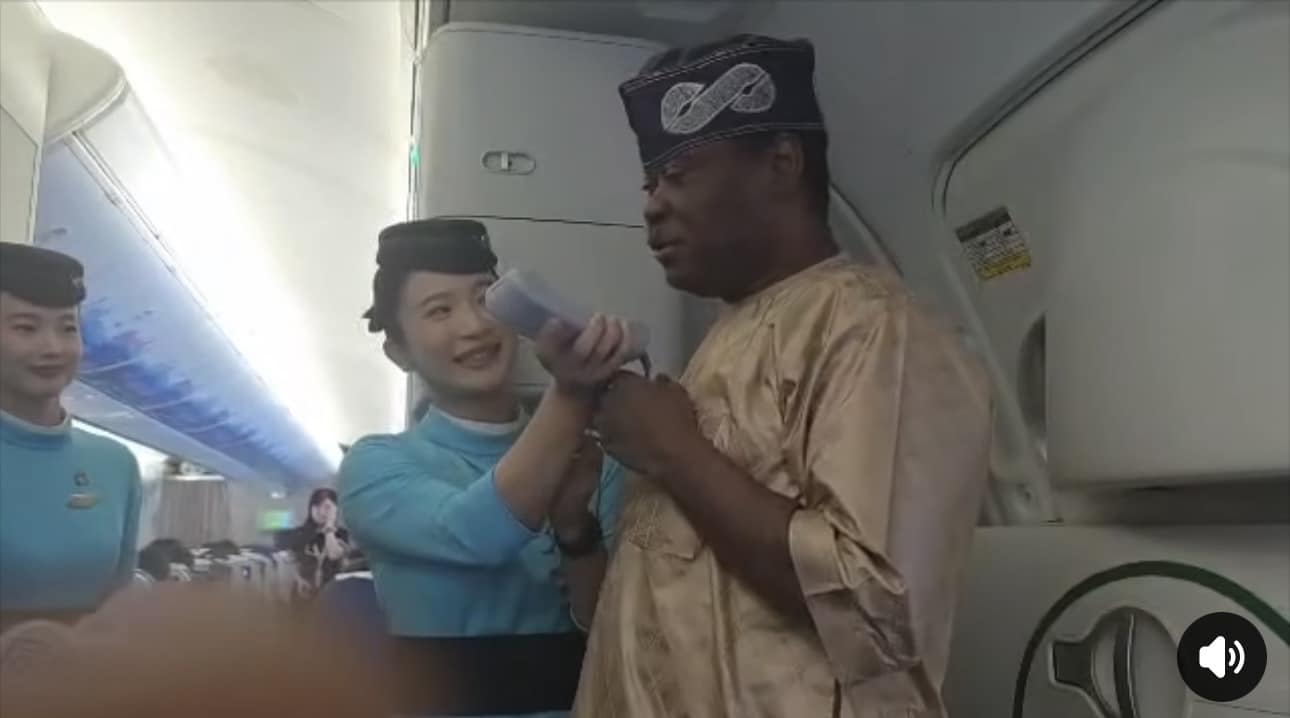
LAGOS, NIGERIA — Passengers aboard a commercial flight were recently treated to an unconventional mid-air briefing when Nigeria’s Permanent Representative to the United Nations, Ambassador Jimoh Ibrahim, transformed the aircraft aisle into a diplomatic lecture hall.
In a video shared on his official Facebook page on Thursday, the businessman-turned-diplomat was seen standing before fellow travellers to personally outline President Bola Tinubu’s macroeconomic strategy concerning Nigeria’s emerging marine and blue economy sector.
Addressing the cabin with his characteristic vigour, Ambassador Ibrahim detailed the objectives of his official diplomatic mission to Beijing. He explained that his trip follows an invitation from the People’s Republic of China to deliver the opening keynote address at a high-level United Nations Sustainable Development Workshop, which focuses on the high-quality development of the marine economy.
The core of his message to the passengers centred on a fundamental shift in how Nigeria intends to engage with global powers. Emphasising a move away from traditional aid dependencies, Ambassador Ibrahim stated: “President Bola Tinubu is offering China an open invitation for partnership through geophysical data and innovation, not aid.” He argued that prioritising data access over traditional assistance offers superior long-term benefits for the nation.
Focusing on the untapped potential of Nigeria’s coastline, the Ambassador explained that the mission aims to secure partnerships based on the exchange of high-level oceanographic data for advancements in maritime infrastructure. He noted that the newly established Federal Ministry of Marine and Blue Economy is central to this strategy, designed to ensure independent wealth generation while mitigating the risk of debt traps.
Ambassador Ibrahim expressed confidence in Nigeria’s growing global influence, citing the nation’s invitation to lead the opening of the UN-backed maritime summit in China. His impromptu presentation effectively turned the flight into an exercise in public engagement, bringing complex international economic strategies directly to the citizens.




Leave a Reply