
By Sunday Ameh
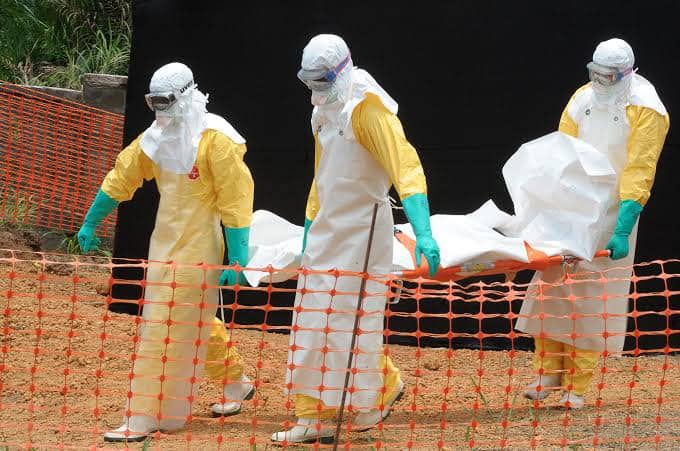
The number of confirmed Ebola cases in the Democratic Republic of the Congo (DRC) has surpassed 4,000 as the country battles the world’s second-largest Ebola outbreak, which health experts say is spreading at an unprecedented rate.
According to the latest data from the DRC Ministry of Health, 4,053 cases of the Bundibugyo strain have been recorded since the outbreak was declared in mid-May, with 1,850 deaths.
The outbreak has spread across 53 health zones in five provinces — Ituri, North Kivu, South Kivu, Haut-Uele and Tshopo.
Ituri, which remains the epicentre of the outbreak, accounts for about 87 per cent of the reported cases, while neighbouring North Kivu accounts for another 11 per cent.
Health experts have warned that the actual number of infections could be significantly higher than the official figures due to challenges surrounding detection and reporting.
The current outbreak has been described as the fastest-spreading Ebola epidemic on record. However, it remains smaller than the 2014–2016 West African outbreak, which recorded more than 28,000 cases across Guinea, Liberia and Sierra Leone.
The response in the DRC has been complicated by ongoing military conflict, delayed detection and limited availability of treatments and vaccines.
Amid the worsening outbreak, vaccine experts at the World Health Organisation (WHO) on Friday recommended that the Ervebo Ebola vaccine be prioritised for a full-scale human clinical trial.
Ervebo is currently the only licensed Ebola vaccine and has been proven effective against the more common Zaire strain. However, there is currently no approved vaccine specifically targeting the Bundibugyo strain responsible for the ongoing outbreak.
Early research has suggested that Ervebo could provide some protection against Bundibugyo Ebola.
Studies involving non-human primates found that three out of four vaccinated animals survived exposure to the Bundibugyo strain, compared with one out of four animals that were not vaccinated.
A separate unpublished study involving ferrets also reportedly found complete protection among animals given a research-grade version of Ervebo.
The WHO’s Technical Advisory Group on Candidate Vaccine Prioritization, however, said a vaccine specifically developed for the Bundibugyo strain remains the preferred option for the current outbreak.
The group cautioned that Ervebo may not necessarily provide strong protection against symptomatic infection or transmission, although it could potentially reduce the risk of death.
Two potential Bundibugyo vaccines are currently undergoing early-stage human clinical trials, while another candidate is being developed.
Meanwhile, the global vaccine alliance, Gavi, said it has a stockpile of about 500,000 Ervebo doses, with some already available in the DRC for possible use in the planned trial.
Gavi chief executive Sania Nishtar said the worsening outbreak could potentially become the largest Ebola outbreak ever recorded.
The WHO and other health authorities continue to urge intensified surveillance, vaccination research and other preventive measures as authorities work to contain the spread of the virus.





Leave a Reply