

By Paul Joseph
The Danish government has announced plans to examine the possibility of introducing a nationwide ban on the public broadcast of the Islamic call to prayer, known as the adhan, sparking fresh debate over religious freedom and integration in the Scandinavian country.
Denmark’s Immigration Minister, Morten Bødskov, said the government would reopen investigations into whether the adhan can be legally prohibited across the country without breaching constitutional protections.
According to the minister, the Islamic call to prayer should not form part of Denmark’s public soundscape, arguing that the increasing visibility of Islamic practices in public spaces has become a growing concern.
Bødskov’s remarks have attracted significant attention because he belongs to the centre-left Social Democrats rather than Denmark’s nationalist right-wing bloc, highlighting the broad political sensitivity surrounding immigration and cultural integration issues.
The proposed move represents the third attempt by a Danish immigration minister to explore legal avenues for restricting public calls to prayer, following similar efforts launched in 2020 and 2025.
Government officials say the latest review will determine whether such a ban can be implemented while remaining consistent with Denmark’s constitutional guarantees on freedom of worship and religious expression.
While Denmark’s constitution protects public religious practices, the country already maintains laws restricting anti-democratic preaching and support for designated extremist organisations.
Observers note that only a limited number of mosques currently broadcast the adhan publicly, prompting critics to question whether a nationwide ban addresses a significant issue or serves primarily as a symbolic political measure.
In several municipalities, including parts of Copenhagen, existing local regulations already prevent outdoor broadcasts from mosque loudspeakers due to strict noise-control policies. The Grand Mosque of Copenhagen, for example, does not broadcast the call to prayer outdoors under an arrangement with local authorities.
Supporters of the proposal argue that a national framework would eliminate inconsistencies created by varying municipal rules. Opponents, however, contend that the measure unfairly targets a single religious community and could face legal challenges if enacted.
The development comes during the third term of Prime Minister Mette Frederiksen, whose administration has pursued some of Europe’s toughest migration and integration policies.
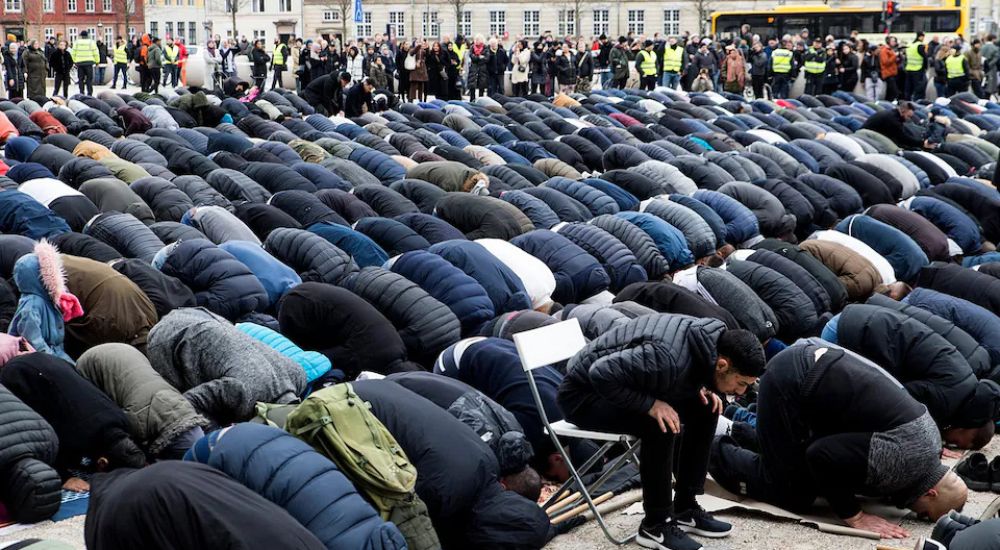
Denmark is home to an estimated 270,000 Muslims within a population of approximately six million people and has around 100 mosques nationwide.
The proposed ban has intensified discussions on secularism, national identity and religious rights, with critics warning that it could deepen feelings of marginalisation among the country’s Muslim minority while raising constitutional questions over freedom of worship.






Leave a Reply