

By Opeyemi Adelakun
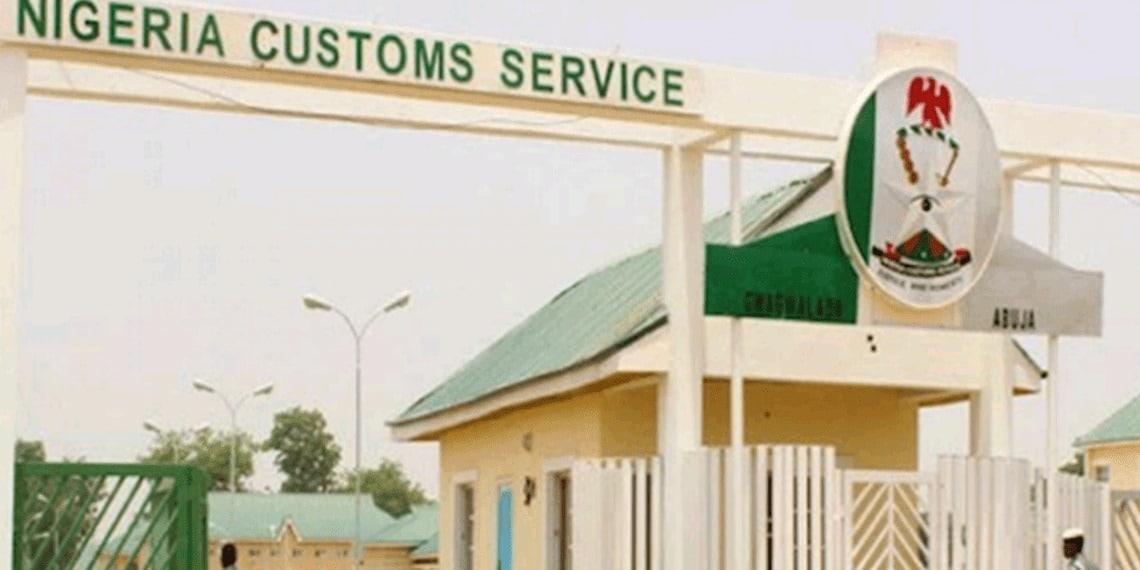
The Nigeria Customs Service has intercepted about 603 firearms between January and August 2026, raising fresh concerns over the movement of illicit weapons into the country ahead of the 2027 general elections.
The seizures come as Nigeria approaches the next election cycle, with the presidential and National Assembly elections scheduled for January 16, 2027, while governorship and State Houses of Assembly polls are fixed for February 6.
The 2027 elections will also be the first general elections to be conducted under the amended Electoral Act 2026.
The firearms seized during the period were among prohibited items intercepted by Customs and subsequently handed over to the National Centre for the Control of Small Arms and Light Weapons for further action.
The seizures include a major interception at the Tin Can Island Port in Lagos, where Customs recently recovered 399 Jojef pump-action rifles and 535 firearm components from a container that had been flagged for inspection.
According to the Comptroller-General of Customs, Adewale Adeniyi, the container arrived at the port on July 8 aboard the vessel MV Velika and was selected for examination through the Service’s risk-management system.
He said the firearms had been dismantled and concealed in an apparent attempt to evade detection.
Following examination and reassembly, Customs recovered 399 fully assembled pump-action rifles alongside firearm components.
“The components included 89 frames, 80 charging handles, 57 trigger groups and 25 locking lugs,” Adeniyi said.
The seizure came after another operation at the same port in which 204 pump-action rifles imported from Turkey were intercepted and handed over to the NCCSALW.
Customs has also recorded other arms-related seizures at different commands.
In January, the Service said arms and ammunition recovered during 25 separate interceptions between 2022 and 2025 were handed over to the NCCSALW.
The items included five pistols, a Crossman Pump Master rifle, 132 Remington live cartridges, 51 rounds of 9mm Luger ammunition, four 9mm magazines, 40 rounds of assorted 9mm and blank or hollow ammunition and 118 empty 9mm shells.
The Ogun Area 1 Command also reported the interception of 2,128 live cartridges, 1,315 explosives and locally made firearms, among other prohibited items.
In June, the Oyo/Osun Area Command reported the arrest of suspects allegedly found with three pump-action rifles.
Customs Comptroller-General Adeniyi warned that the approaching election season could create opportunities for criminal networks to attempt to move weapons through the country’s borders, ports and airports.
“This is a very delicate period for Nigerian history. We are about entering a major election cycle and we know that at this period men of the underworld will want to use our borders, our ports, our airports to bring in items like this,” he said.
He added that the Service would intensify its operations to prevent the importation of prohibited items capable of threatening national security.
“We are going to redouble our efforts to ensure that we do not allow them to do so,” Adeniyi said, adding that Customs would also guard against accomplices within the Service and other security agencies.
He urged Nigerians with useful intelligence on suspected arms traffickers to provide such information to the authorities.
The Director-General of the NCCSALW, Kokomo Johnson, said illicit small arms and light weapons remained a major driver of terrorism, banditry, kidnapping, insurgency and other violent crimes.
Meanwhile, the Sea Empowerment & Research Centre urged the government to treat the recent seizures as a national security intelligence issue rather than merely an enforcement success.
“The latest seizure, coming only weeks after the interception at the same port of firearm components that yielded 399 pump-action rifles, should, however, be treated as more than an enforcement success. It is a national-security intelligence signal requiring a deeper investigation of the entire supply chain,” the group said.
The Chief Executive Officer of the Centre for the Promotion of Private Enterprise, Dr Muda Yusuf, said the repeated attempts to bring firearms into Nigeria could point to growing desperation among sections of the political class ahead of the election.
“I will say that this is a reflection of the desperation among the political class about this election. It is not a very good thing that you are seeing a frequent attempt to import firearms,” Yusuf said.
He warned that the development could heighten fears of violence and negatively affect Nigeria’s investment climate.
“There is also the risk of investment in our environment because, in some extreme cases, it scares people away from the country, including investors. So it is not a very good signal at all that we are having this kind of import,” he added.
Maritime expert Okey Ibekwe said the seizures raised broader questions about the quantity of weapons that may have entered the country undetected.
“Number one is the security, the threat to security, then, of course, they also intercepted, but we don’t know the quantity that passed through the system undetected because if its concealment is dismantled, even the scanning machine cannot even detect whether they are gone or not. The ones that were intercepted were through intelligence and risk management and risk analysis,” he said.
Ibekwe called for further investigation into the origin of the weapons, the importers and financiers behind the consignments.
“Then, the second, it is not enough to intercept those arms. After intercepting them, what next? Have the importers, the financiers, been tracked? Has the source of the arms been established? Has our government gotten in touch with the government of the source? They are very important,” he said.





Leave a Reply