
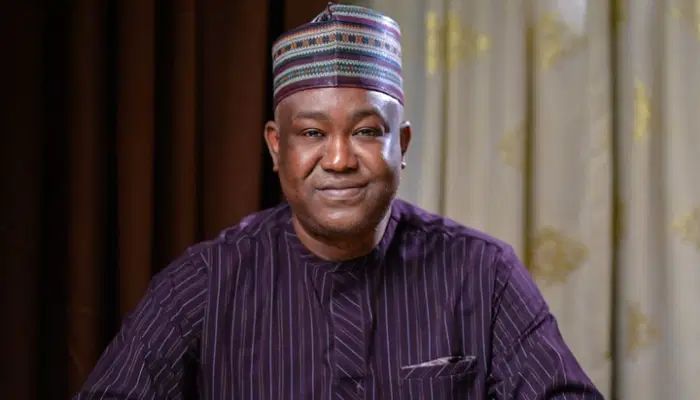

By Ashiru Taofeek Adewale
Former presidential candidate, Gbenga Olawepo-Hashim, has called for the immediate resignation of the Chairman of the Independent National Electoral Commission (INEC), Joash Amupitan, accusing him of overstepping his authority and structuring the recently released 2027 election timetable to favor the ruling All Progressives Congress (APC).
In a fiery statement issued on Saturday, Olawepo-Hashim rejected the adjusted schedule for party primaries announced by INEC on Thursday, February 26, 2026. He argued that the commission does not possess the constitutional power to dictate when political parties should conduct their internal primaries, as long as they comply with statutory deadlines for the submission of candidates’ names.
“It’s not the business of INEC to dictate to parties when they should conduct nominations of candidates for elections,” Olawepo-Hashim said. “This shows that Amupitan cannot be trusted. It’s either he resigns or Nigerians will embark on mass action to force him out. He should not be allowed to stay a day longer in that office.”
The former presidential aspirant alleged that the decision to move party primaries to an earlier date was a calculated attempt to weaken opposition parties currently grappling with internal disputes and court cases. He accused the INEC chairman of deliberately engineering the timeline to destabilize challengers to the APC.
“He’s deliberately working to favour the APC, having destabilised other political parties who are trying to sort themselves out in court. That is disingenuous and wrong,” he stated.
INEC has defended its adjustments to the 2027 election timetable, which includes specific timelines for party primaries and the submission of candidates. The commission maintains that such timelines are necessary to ensure the orderly conduct of the electoral process and compliance with the provisions of the Electoral Act.
However, Olawepo-Hashim countered this position, asserting that while INEC has the responsibility to fix dates for general elections and set deadlines for the submission of candidates’ lists, the conduct and scheduling of party primaries remain the internal affairs of political parties.
“INEC is not a headmaster that can impose what it wants on political parties,” he argued. “As long as parties comply with the Electoral Act regarding submission timelines, they have the right to determine when to hold their primaries.”
The former presidential candidate warned that public confidence in the electoral body’s leadership is crucial for the credibility of the 2027 elections. He cautioned against what he described as the danger of predictable electoral outcomes, insisting that elections financed by taxpayers must reflect genuine democratic choice.
“For us to have an acceptable, free and fair election in 2027, INEC has to be reconstituted,” Olawepo-Hashim insisted. “Rushing out an ill-thought-out timetable after what we consider a poor performance in the Abuja Area Council election shows that the chairman cannot be entrusted with the 2027 general election.”
Referencing historical precedents in Nigeria’s political trajectory, he cautioned against actions that could erode public trust in democratic institutions. He urged stakeholders to safeguard the country’s 27 years of uninterrupted democratic rule, warning that perceived bias or administrative overreach could inflame political tensions ahead of the 2027 polls.
Debates over the independence, neutrality, and administrative powers of INEC have historically intensified in the lead-up to major elections, and this latest controversy is set to dominate political discourse as the nation prepares for the next general vote.





Leave a Reply