
By George Omagbemi Sylvester
On a cold January morning in Minneapolis, a disturbing tableau of law enforcement chaos, flawed decision-making and fatal consequences played out on public pavement. The death of Alex Jeffrey Pretti, a 37-year-old American intensive care nurse, at the hands of United States federal agents has become one of the most contested and consequential stories in recent memory which is not because it was simple, but because it was deeply complicated and shockingly misrepresented.
At its core, this was not merely an isolated shooting. It was a vivid lens on systemic failures: the rush to judgment by federal officials, the conflict between official narrative and eyewitness evidence, the opaque handling of critical video material and the rapidly fraying trust between communities and the institutions charged with protecting them.
What Happened: A Clearer Sequence. On a winter morning in Minneapolis, January 24, federal Border Patrol and Immigration and Customs Enforcement (ICE) agents were engaged in an operation in a busy city neighborhood. According to official Department of Homeland Security (DHS) accounts, agents encountered Pretti as they pursued a separate law enforcement objective. DHS claimed Pretti approached officers while armed with a 9mm handgun, refused to comply, and that this perceived threat justified the use of deadly force.
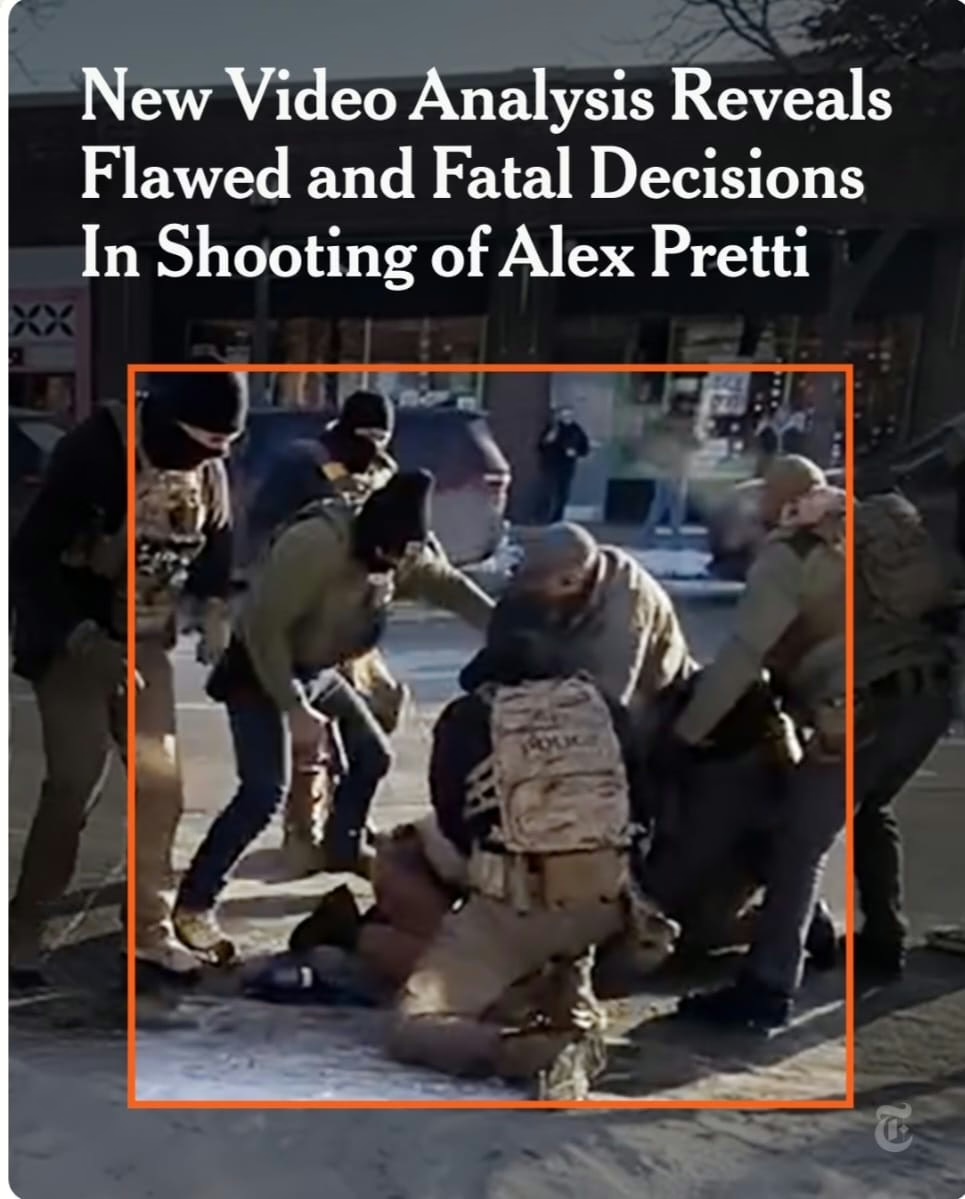
This version of events quickly unraveled. Multiple independent video recordings from bystanders contradicted key aspects of the federal narrative. These videos were reviewed frame by frame by Reuters, BBC, The New York Times, CNN, AP News, STAR News and other respected outlets, which showed Pretti holding a cellphone in his hand, not a weapon, as he interposed himself between officers and a woman who appeared to have been pushed to the ground.
In the footage, several agents wrestle Pretti to the pavement. One agent is seen removing a firearm from the chaotic scuffle and walking away just moments before another agent fired at least ten shots into Pretti’s body over a matter of seconds. Notably, many of those shots were fired while Pretti was pinned to the ground and motionless, contradicting the claim that he posed an active threat at the moment of the killing.
Local authorities later determined Pretti was legally permitted to carry a firearm, but whether he ever drew it, whether it was his to draw or whether officers knew it had been removed from him before shots were fired remains intensely disputed.
From Cellphone to Chest Wounds: Eyewitness Evidence vs. Official Spin. This stark contradiction between multiple perspectives (official statements and raw video evidence) underscores the core problem confronting democratic societies when the institutions responsible for truth and justice appear to protect themselves before the facts are clear.
Like former police lieutenant and use-of-force expert Charles “Joe” Key succinctly told the Associated Press: “Evaluating the reasonableness of this shooting will entirely depend on when the pistol became visible and how, if at all, it was being displayed or used.”
That essential nuance was missing entirely from the initial statements issued by DHS and federal spokespeople, who characterized the episode as a justified defensive action. The rush to frame the narrative (before full evidence review) is an indictment of governance that places institutional reputation above public truth.
Context Matters: Why This Is Bigger Than Minneapolis. This killing did not happen in a vacuum. It occurred against the backdrop of intense national debate over immigration enforcement, federal policing powers, community mistrust and the broader question of how and when force should be used by law enforcement. In the weeks leading up to the Pretti incident, Minneapolis had already been the site of another controversial federal shooting (the death of Renée Good) further igniting public scrutiny.
Former policing scholar and criminal justice professor Ian Adams described the federal response as “amateur hour,” a blunt assessment reflecting the frustration of professionals who see the disregard for careful investigative procedures as deeply damaging to national policing standards.
The Minneapolis episode has quickly become a flashpoint: a rallying cry for advocates of policing reform, civil liberties scholars and communities weary of disproportionate use of force. It is now a case study in how repeated misrepresentations erode trust not only in law enforcement but in the very fabric of democratic accountability.
Accountability and the Politics of Truth. The Pretti killing illustrates a dangerous trend: narrative control by institutions before evidence is independently assessed. When DHS and federal agents issued definitive versions of events immediately after the shooting, before all footage was available or examined, it set a precedent that skewed public perception and sowed distrust.
Legal experts have stressed that in a functioning democracy, transparency is not optional but it is foundational. Without full disclosure of body-cam footage, unedited videos, forensic autopsy results and independent investigations, it becomes impossible to determine what actually happened and who should be held accountable. Experts have chastised the settlement of public opinion based on incomplete or contradictory official accounts; a practice that invites cynicism and undermines the rule of law.
As renowned scholar of governance and justice Dr. Michelle Alexander has argued in contexts of policing and civil liberties: “When the carceral state operates without strict oversight or accountability, it not only harms individuals but corrodes our social contract.” Although Dr. Alexander’s work centers on domestic law and racial justice, the principle remains starkly relevant here, unchecked authority cannot be the answer in a democratic society.
The Human Cost and Public Reaction. Beyond legal arguments and political debates lies the human tragedy of a life cut short. Pretti was a healthcare worker, described by colleagues and friends as someone who dedicated his professional life to helping others. That he ended up dead, not through lawful protection of others but amid confusion and contested actions by federal officers, speaks to a rupture between public service ethos and law enforcement conduct.
Protests erupted almost immediately in Minneapolis after the videos went viral. Local residents denounced federal agents, raised questions about excessive use of force and demanded full transparency. Some chants equated the shooting with authoritarian conduct with a telling reflection of public sentiment shaped by repeated institutional missteps.
Looking Ahead: Lessons and Imperatives. What emerges from this tragic episode is a set of non-negotiable imperatives:
Unconditional transparency: All video footage, official communications and investigative materials must be independently audited and released.
Independent oversight: Federal law enforcement agencies must be subject to genuinely independent review boards, not internal affairs structures with inherent conflicts of interest.
Reform of use-of-force policies: The criteria for deadly force must be crystal clear and aligned with international best practices, with zero tolerance for misrepresentation.
Rebuilding public trust: Where trust is broken, institutions must engage communities with humility, accountability and repeated evidence of procedural fairness.
As policing expert Dr. David Klinger has observed in academic research: “Perception of legitimacy is as important as legality itself though when people believe the system is fair, compliance and trust grow; when they believe it is biased, defiance and distrust grow.” The Pretti case is now part of that broader story of legitimacy.
Reckoning: A Democracy’s Test. The killing of Alex Pretti stands as a sobering testament to what can happen when power outpaces accountability. It is not simply a police shooting; it is a crisis of governance, narrative control and institutional integrity. If democracy requires anything of its leaders and its enforcement agencies, it is to uphold truth even when truth complicates power.
To ignore these lessons is to invite further tragic repetitions. To confront them head-on is to recommit to a democratic ethic that privileges human life, justice and transparency above convenient narratives.






Leave a Reply