
By George Omagbemi Sylvester |
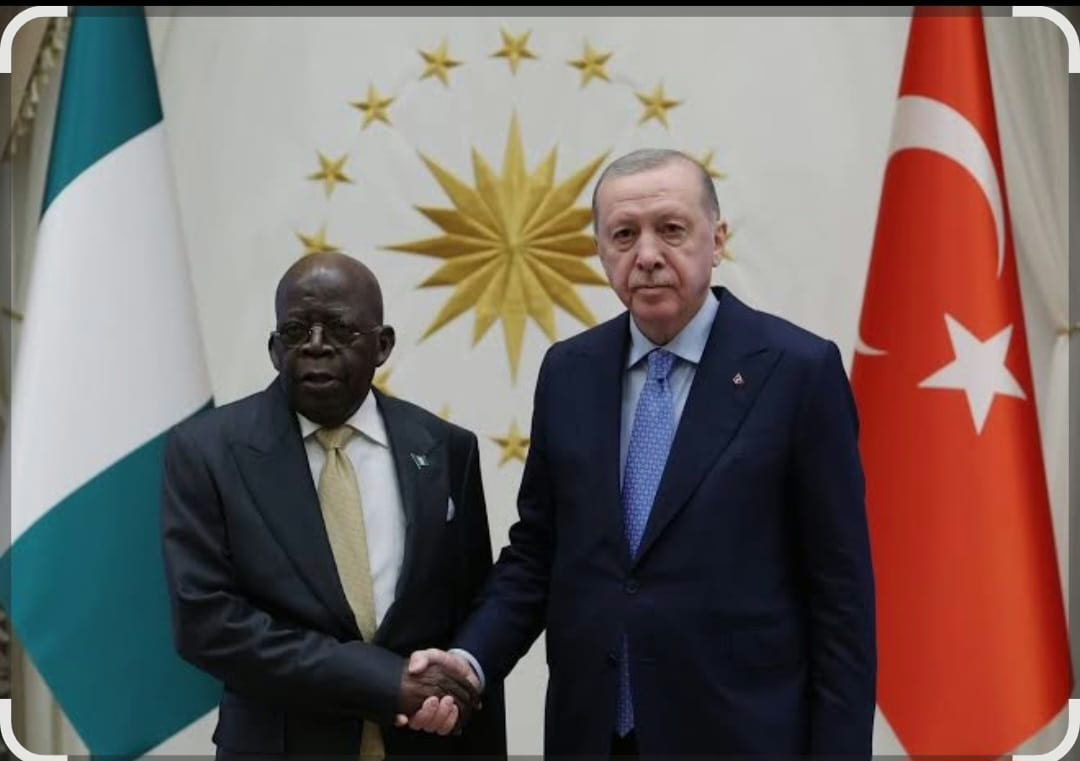
In a moment of far‑sighted diplomacy and strategic alignment, Nigeria and Türkiye have taken a decisive leap forward in bilateral cooperation, signing a comprehensive suite of nine agreements that collectively articulate a bold vision for their partnership in the twenty‑first century. The signing ceremony, held in Ankara with Nigerian Head of State Bola Ahmed Tinubu and Turkish President Recep Tayyip Erdoğan presiding, was more than a ceremonial exchange of documents and though it was a moment that signals shared ambition, mutual respect and a sincere commitment to cooperative development across multiple sectors.
These agreements are neither symbolic nor superficial. They represent tangible frameworks that will govern cooperation in areas vital to national growth: diaspora engagement, media development, higher education, quality standards and halal certification, economic and trade cooperation, military collaboration, diplomatic training, social development and women’s empowerment. Together, they define not only the broad contours of a reinvigorated relationship between Nigeria and Türkiye, but also a blueprint for cooperation that other nations may soon emulate.
For Nigeria (Africa’s most populous nation and one of its largest economies) this moment is especially consequential. For Türkiye, a pivotal Eurasian player with an expansive foreign policy footprint, deepening collaboration with Nigeria reinforces its influence across Africa and strengthens its ties with an important economic partner. Importantly, these agreements reflect a nuanced relationship grounded in mutual interests, not mere diplomacy for diplomacy’s sake.
From Diaspora to Diplomacy: Agreements That Matter.
The nine signed agreements provide a roadmap for collaboration that is practical, multidimensional and forward‑leaning. Their strategic value lies in both the sum of the parts and the breadth of sectors they encompass.
Diaspora Policy Cooperation:
A memorandum of understanding on diaspora policy was signed between the Turkish Presidency for Turks Abroad and Related Communities and Nigeria’s Commission for Nigerians in the Diaspora. This pact recognizes the centrality of diaspora communities as bridges for cultural exchange, investment flows, and transnational innovation. Scholars like Dr. Amina El‑Bushra, an expert in transnational studies, have long argued that diaspora engagement is “a strategic asset for national development when harnessed through institutional cooperation rather than ad hoc efforts.” This agreement, therefore, positions both nations to tap into human capital networks that stretch across continents.
Media and Communication Collaboration:
In an era where narrative shapes reality, cooperation on media and communication provides a mechanism for shared learning, exchange of expertise and professional development in journalism and broadcasting. The memorandum envisages joint seminars, training programs, exchange visits and information sharing. Media scholar Prof. Umer Farooq has observed, “In an interconnected world, media policies that encourage cross‑cultural engagement are vital to strengthening democratic discourse and countering misinformation.” The agreement lays a foundation for media ecosystems in both countries to evolve through shared standards and cross‑border perspectives.
Higher Education and Academic Exchange:
The memorandum on higher education cooperation speaks to the future of intellectual exchange and capacity building. Nigerian and Turkish universities will now have an institutional platform to expand collaborative research, student exchange and staff development programs. Education expert Dr. Kelechi A. Okonkwo emphasizes that “expanded academic cooperation enables the transfer of knowledge and skills necessary for national development, fostering innovation that transcends borders.” This pact is likely to enhance academic pathways, research collaborations and cultural understanding.
Halal Quality Infrastructure:
A memorandum between Türkiye’s Halal Accreditation Agency and Nigeria’s National Accreditation System will strengthen halal certification infrastructure. Halal markets are expansive and growing globally, reflecting significant economic and cultural values. Experts in global trade such as Dr. Sanjay Jain describe halal certification not merely as a market niche, but as “a strategic sector that links production, trade and cultural identity.” This agreement is poised to unlock export potential and facilitate Nigeria’s deeper integration into global halal value chains.
Joint Economic and Trade Committee (JETCO):
Perhaps the most consequential pact is the joint declaration establishing the Joint Economic and Trade Committee. This institutional mechanism creates a sustained platform for economic dialogue, private sector engagement, and policy coordination, intended to stimulate bilateral trade and investment. According to official statements, Nigeria has become Türkiye’s largest trading partner in Sub‑Saharan Africa which is a milestone that underscores the economic significance of this relationship. The bilateral trade volume in the first eleven months of the previous year was near historic highs, even before the full implementation of these agreements.
Military Cooperation and Security Architecture:
The protocol on military cooperation underscores a deepening security partnership between the two nations. Nigerian defense forces have previously engaged with Turkish defense technology, including the acquisition of military helicopters that enhance operational capacity. This cooperation reflects shared interests in ensuring stability, combating insecurity and building indigenous capabilities in defense sectors. Security analyst Dr. Amara Eze notes that “strategic defense cooperation grounded in shared values strengthens both national and regional security architectures.”
Education, Diplomatic Training, and Social Development:
Additional agreements on general education cooperation, diplomatic academy exchange and women’s empowerment initiatives capture the holistic nature of this bilateral framework. They extend cooperation to institutional strengthening, professional training in foreign service and social policies that promote inclusion and gender equity. Such agreements resonate with global development norms and respond to calls from civil society leaders who champion capacity building and inclusive governance.
A New Chapter in Bilateral Relations.
The sweeping scope of these nine agreements signals far more than transactional diplomacy. They reveal a shared commitment to institutional cooperation, economic integration, cultural exchange and security collaboration. What emerges is a holistic relationship built on mutual respect, shared interests and a long‑term vision.
President Tinubu’s words during the joint press conference in Ankara encapsulated this sentiment when he pledged deepened cooperation on security, trade and inclusive development, affirming that Nigeria stands with partners who share commitments to democracy, freedom and prosperity. Likewise, President Erdoğan emphasized Türkiye’s readiness to support Nigeria’s security and economic aspirations.
International affairs scholar Dr. Harriet Mensah succinctly contextualizes this moment: “Partnerships grounded in strategic alignment and mutual benefit are the bedrock of twenty‑first century diplomacy. When nations invest in holistic cooperation (from academia to defense to trade) they build relationships that endure beyond political cycles.”
Summative Insight: A Blueprint for Shared Success.
The nine agreements signed between Nigeria and Türkiye define a new chapter in their bilateral relationship with one that transcends rhetoric to establish pragmatic cooperation across multiple domains of national significance. They anchor economic aspirations, strengthen institutional ties, nurture educational and cultural exchange and fortify security collaboration.
As the global order becomes increasingly interconnected and competitive, the Nigeria‑Türkiye partnership stands out as a bold example of how nations with shared ambitions can craft a comprehensive framework for mutual growth. This suite of agreements is not merely a diplomatic milestone; it is a strategic foundation upon which both nations can build sustainable futures characterized by economic resilience, security cooperation and meaningful engagement on the world stage.
In the words of a renowned development expert, “Partnership is not merely signing agreements, but embedding collaboration into the very structures that shape national progress.” With these nine agreements, Nigeria and Türkiye have done just that.



Leave a Reply